
Industrial heat exchangers
An industrial heat exchanger is equipment that transfers thermal energy between two or more fluids at different temperatures without direct contact. It is used to heat, cool, condense, evaporate or recover heat within industrial processes, improving energy efficiency and reducing the operating costs of the installation.
At BOIXAC, we conceive custom-built heat exchangers for demanding thermal processes across sectors including chemical, food, pharmaceutical, metallurgical, energy and wastewater treatment. We work with plant engineers, EPC contractors and OEM equipment manufacturers who need heat exchange solutions precisely adapted to the real conditions of each industrial process.
What is an industrial heat exchanger?
A heat exchanger is a system designed to transfer heat in a controlled way between two or more fluids — gas, liquid or solid — that are at different temperatures, without mixing them.
The operating principle is based on thermal conduction and convection: the hotter fluid transfers energy through a separation surface to the cooler fluid, continuously and in a controlled manner.
Industrial heat exchangers are used to:
- Recover residual heat from combustion or process gases
- Cool products or fluids in production circuits
- Preheat fluids before chemical reactions or combustion
- Condense vapours in distillation or evaporation processes
- Control process temperature in industrial reactors
- Reduce VOC and NOx emissions through thermal treatment
Types of industrial heat exchangers: technical comparison
The choice of heat exchanger type depends on the fluid type, operating temperatures and pressures, fouling level and maintenance conditions. The following table summarises the main available technologies with their typical technical parameters.
| Type | Temp. range (°C) | Max. pressure | Thermal efficiency | Maintenance | Ideal application |
|---|---|---|---|---|---|
| Shell and tube | −100 to 600°C | Up to 400 bar | Medium–high | Moderate | Petrochemical, refinery, high pressure |
| Gasketed plate | −25 to 180°C | Up to 25 bar | High | Easy (removable) | Food, pharma, clean liquids |
| Gas-to-gas | Up to 1,200°C | Low pressure | Medium | Moderate | Flue gas, RTO, air preheating |
| Gas-to-liquid (finned) | Up to 450°C | High | Medium | Moderate | Gas and liquid treatment |
| Gas-to-liquid (economiser) | 100 to 600°C (gas) | Up to 40 bar | High | Moderate | Boilers, flue gas recovery, OEM |
| Pillow plate (solids) | −40 to 600°C | Up to 100 bar | High | Easy | Bulk solids, fertilisers, sugar |
| Tube coil | Up to 400°C | Up to 100 bar | Medium | Low | Limited space, steam, thermal oil |
Values shown correspond to typical design ranges. Exact parameters for each unit depend on the fluid, material and specific process conditions.
How to choose the right heat exchanger for your process
Selecting an industrial heat exchanger requires analysing the process parameters before choosing the technology. Follow these steps to identify the most suitable solution:
1. Identify the fluids involved
Determine whether the fluids are gases, liquids, solids or a combination. Assess their viscosity, presence of suspended particles, corrosive behaviour and compatibility with the equipment’s construction materials.
2. Define the operating temperatures and pressures
The inlet and outlet temperatures of both fluids determine the required heat transfer area and the applicable technology. Operating pressures determine the required mechanical construction type — and the applicable standards: PED 2014/68/EU, ASME.
3. Calculate the thermal duty of the process
The thermal power to be transferred (in kW or kcal/h) is the central design parameter. It is derived from the mass flow rates and fluid enthalpies, or from the energy balances of the process.
4. Assess the fouling level
Fluids with particles, scaling or fouling tendency require technologies that allow access for cleaning (removable plates, extraction systems) or that tolerate dirty surfaces without significant loss of performance.
5. Determine space and installation constraints
Available space, equipment orientation (horizontal or vertical), existing connections and maintenance requirements all condition the geometry of the heat exchanger.
6. Verify regulatory requirements
Depending on the fluid and operating conditions, it may be mandatory to comply with the Pressure Equipment Directive (PED 2014/68/EU), the ASME code, ATEX regulations or hygiene standards (EHEDG, FDA, 3-A) for food or pharmaceutical applications.
Need help selecting the right heat exchanger for your process? Our technical team analyses your application with no obligation.
BOIXAC industrial heat exchanger models
BOIXAC conceives heat exchangers across four main functional families, each optimised for specific operating conditions. Select the family that matches your fluid type or industrial application:
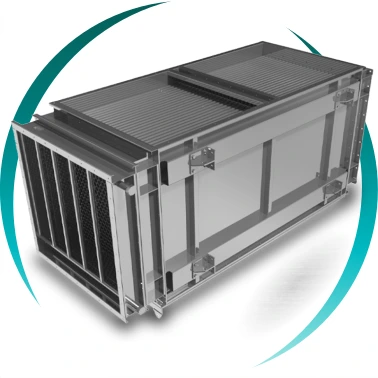
Energy recovery from combustion gases, air preheating and industrial flue gas treatment up to 1,200°C.
View solutions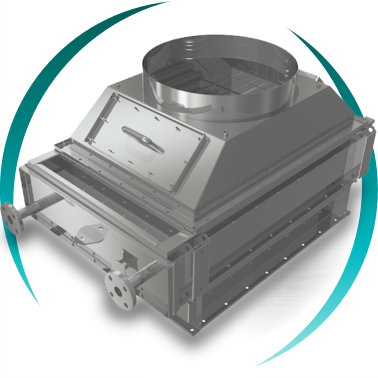
Economisers, flue gas heat recovery units and condensation systems for industrial boilers and combustion processes.
View solutions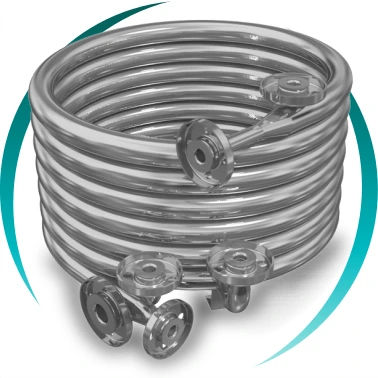
Shell and tube, gasketed plate and double-pipe designs for process circuits in chemical, food and pharmaceutical industries.
View solutions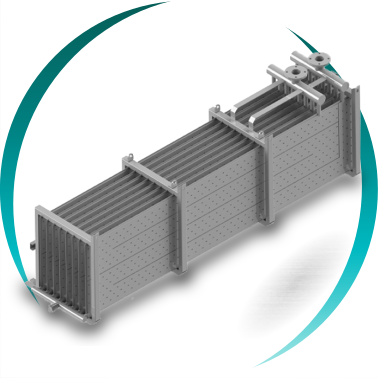
Pillow plate and specific solutions for heating or cooling bulk solids, granulated materials and fluidised beds.
View solutionsIndustrial applications of heat exchangers
Industrial heat exchangers are critical equipment in any process where thermal control and energy recovery are competitive factors. The following industries account for the majority of applications:
| Industry | Main application | Recommended technology | More information |
|---|---|---|---|
| Chemical & petrochemical | Reactor cooling, condensation | Shell and tube, double-pipe | Chemical industry |
| Food & beverage | Pasteurisation, product cooling | Gasketed plate, pillow plate | Food industry |
| Energy & boilers | Flue gas recovery, economisers | Gas-to-liquid, economiser, gas-to-gas | Energy industry |
| Metallurgical & steelmaking | Process cooling, gas treatment | High-temp gas-to-gas, tubular | Metallurgical industry |
| Pharmaceutical | Process temperature control, purified water | Plate, sanitary double-pipe | Pharmaceutical industry |
| Wastewater treatment | Anaerobic digestion, sludge, heat recovery | Tubular, double-pipe, gas-to-liquid | Wastewater treatment |
| Process & drying | Industrial drying, dehumidification | Gas-to-gas, gas-to-liquid, coil | Process and drying |
| Oil & Gas | Process cooling, phase separation | Shell and tube, air-cooled | Oil and gas |
Frequently asked questions about industrial heat exchangers
What is the difference between a shell and tube heat exchanger and a plate heat exchanger?
Shell and tube heat exchangers withstand higher pressures (up to 400 bar) and temperatures, and are suitable for dirty or corrosive fluids. Plate heat exchangers offer higher thermal efficiency per unit volume, facilitate cleaning and are ideal for clean fluids at moderate pressures. The choice depends on the process conditions, not on an inherent superiority of one technology over the other.
How much does an industrial heat exchanger cost?
The cost of an industrial heat exchanger ranges from €2,000 to over €100,000 depending on the type, material, thermal duty and applicable standards. Standard gasketed plate units for simple processes are the most economical; custom high-pressure units in stainless steel or special alloys carry the highest cost. Contact our technical team for a quote tailored to your process.
What standards apply to industrial heat exchangers in Europe?
In Europe, heat exchangers operating above certain pressure and temperature limits are subject to the Pressure Equipment Directive 2014/68/EU (PED). Depending on the equipment characteristics, the classification may be Article 4.3, Category I, II, III or IV, with different levels of inspection and documentation. In potentially explosive atmospheres, the ATEX Directive 2014/34/EU also applies.
What materials are used in industrial heat exchangers?
The most common materials are carbon steel (for non-corrosive fluids at moderate temperatures), stainless steel AISI 304 and 316L (for food, pharmaceutical and moderately corrosive applications), and special alloys such as Incoloy 825, Hastelloy C-276 or titanium for highly corrosive fluids or extreme temperatures. Material selection depends on fluid type, temperature, pressure and traceability requirements.
When is a custom-built heat exchanger necessary?
A custom-built heat exchanger is necessary when standard units do not cover the process conditions: corrosive or viscous fluids, unconventional installation geometries, specific regulations, temperatures or pressures outside standard ranges, or when the process requires integrating the equipment into a broader thermal system. At BOIXAC, we design bespoke solutions for these situations.
What is an economiser and how does it differ from a heat recovery unit?
An economiser is a specific type of gas-to-liquid heat recovery unit that uses exhaust gases from a boiler or combustion process to preheat feed water or the process fluid. The term “heat recovery unit” is more generic and includes any equipment designed to capture and reuse residual thermal energy, regardless of fluid types or equipment geometry.
How is the efficiency of a heat exchanger calculated?
Heat exchanger efficiency is expressed through thermal effectiveness (ε), which compares the heat actually transferred with the maximum theoretically transferable heat. A heat exchanger with 85% effectiveness transfers 85% of the heat that would be possible with infinite heat transfer area. The overall heat transfer coefficient (U) and the LMTD method (log mean temperature difference) are also used for sizing.
What maintenance does an industrial heat exchanger require?
Routine maintenance includes cleaning heat transfer surfaces to remove scale and fouling deposits, visual inspection of gaskets and connections, monitoring pressure drop (an increase indicates fouling) and verifying thermal efficiency against design values. Frequency depends on the fluid type and fouling level of the process. Gasketed plate, double-pipe and removable-bundle shell and tube heat exchangers allow easier and more frequent cleaning.
What is the difference between a heat exchanger and a condenser?
A condenser is a specific type of heat exchanger designed to cause the phase change of a vapour to liquid by extracting latent heat. All condensers are heat exchangers, but not all heat exchangers are condensers. General heat exchangers operate in liquid or gaseous phase without any change of state.
What is the typical lead time for a custom heat exchanger?
Lead times for custom-built heat exchangers range from 4 to 16 weeks depending on equipment complexity, material, applicable standards and manufacturer workload. PED Category III–IV units requiring third-party inspection have longer lead times due to certification procedures. For urgent projects, contact our team to discuss express manufacturing options.
Heat exchanger projects delivered by BOIXAC
BOIXAC has delivered high-performance thermal systems in demanding industrial environments across Europe, including:
- Heat recovery systems in recuperative thermal oxidisers (RTO) for a bioplastics plant in the Netherlands
- Heat exchangers for waste drying in large-scale biogas plants for two of the leading Spanish energy groups
- Energy recovery solutions for one of the leading European industrial groups in the minerals processing sector
- Process cooling equipment at a French metallurgical plant for a multinational group
- VOC treatment systems using heat recovery units for a national metallurgical industry
These projects demonstrate our capability to design and supply heat exchangers adapted to real industrial conditions, with operational reliability and full regulatory compliance.
Do you need a heat exchanger for your industrial process?
Our technical team analyses your process conditions and proposes the most suitable heat exchange solution, both for new installations and replacement of existing equipment.
We work with plant engineers, maintenance managers, procurement departments and EPC contractors across Europe.