
Special heat exchanger for critical industrial processes
When is a special heat exchanger needed
A standard catalogue heat exchanger is optimised for common process conditions: known fluids, standard pressure ranges, conventional geometries. When the process departs from those conditions, the standard exchanger is no longer the most efficient solution —or is simply not viable.
BOIXAC special heat exchangers are the answer when the project presents any of these characteristics:
- Non-conventional geometry of the tank or host equipment, preventing the use of a standard external heat exchanger
- Variable or intermittent thermal loads requiring energy storage —not just instantaneous transfer
- Operation in a pressurised gas environment, where the external fluid is not liquid but a gas or gas-vapour mixture
- Precise thermal control of the contents of a tank or reactor, where product temperature determines process quality or safety
- Strict hygiene or chemical compatibility requirements excluding standard materials or geometries
- Severe space or structural integration constraints requiring the exchanger to be designed around the equipment, not the other way round
In all these cases, custom design allows optimisation of the overall heat transfer coefficient (U), reduction of energy losses and guaranteed operational stability.
The three BOIXAC special heat exchanger types
These three solutions are not variants of the same product or interchangeable responses. Each responds to a different process logic and is designed with specific construction criteria.
Cold jacket · Thermal control of tanks and reactors
The cold jacket is a heat exchange system integrated directly onto the outer wall of a tank or reactor. The heat transfer fluid —chilled water, glycol, hot water or steam— circulates between the tank wall and the outer jacket, precisely controlling the temperature of the product inside. No external heat exchanger is required: transfer occurs through the equipment wall.
It is the preferred solution when thermal control of the product is a critical factor of process quality or safety: fermentation, exothermic reactions, dairy processes, viscosity of sensitive fluids. BOIXAC conceives the jacket from the actual tank geometry, the required temperature differential and the properties of the heat transfer fluid.
Industrial ice bank · Thermal energy storage
The BOIXAC industrial ice bank is a refrigeration energy storage system: it produces ice during off-peak electricity hours and uses it subsequently to cover cooling demand peaks without increasing the installed capacity of the refrigeration system. The heat exchanger is the element where ice is produced and stored —built specifically to operate in repeated freeze-thaw cycles without mechanical degradation.
It is the appropriate solution when refrigeration demand is uneven over time, when reducing the installed capacity of the refrigeration plant is the objective, or when the project involves integration with renewable energy or variable electricity tariffs. Sizing is based on the actual demand curve, not peak demand.
Pressurised heat exchanger · Heat transfer in gaseous environments
The BOIXAC pressurised heat exchanger is integrated within a casing sized to operate with gases or aeriform fluids at medium or low pressure on the external side. Unlike a conventional heat exchanger where the external fluid is liquid and pressure acts only inside the tube, here both sides of the exchanger may be under pressure —or the external side is a gas requiring containment.
Applied in processes involving compressed air, technical gases, reactive mixtures or environments where the structural safety of the casing is a regulatory requirement. The design complies with PED Directive 2014/68/EU in the applicable category according to fluid, pressure and volume.
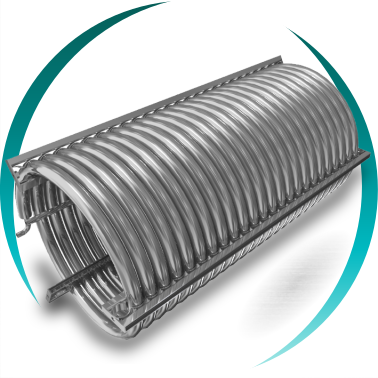
Heat exchange system integrated onto the tank or reactor wall. Precise product temperature control without an external heat exchanger.
View solutions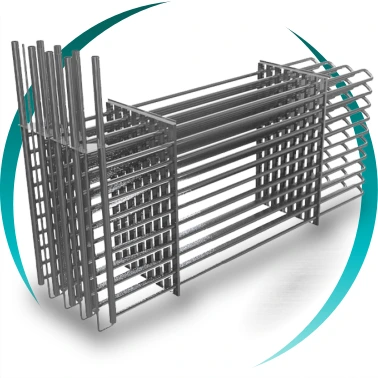
Produces ice during off-peak hours and uses it at demand peaks. Reduces installed refrigeration capacity and optimises energy costs.
View solutions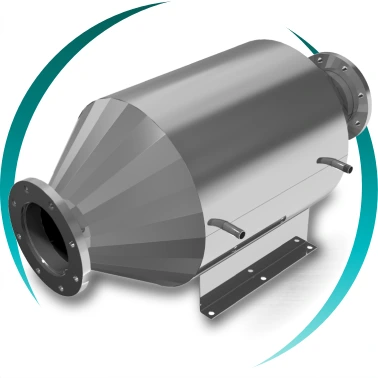
Heat exchanger integrated in a casing for gases or aeriform fluids at medium or low pressure. PED 2014/68/EU compliant design per applicable category.
View solutionsEngineering criteria in special heat exchanger design
| Parameter | Main type | Typical BOIXAC range | Conditioning factors |
|---|---|---|---|
| Thermal load | All | 1 – 5,000 kW | Determines the required heat transfer surface |
| Temperature differential (ΔT) | All | 2 – 200°C | Conditions the area and flow configuration |
| Design pressure (internal side) | All | Up to 100 bar | Determines wall thickness and PED requirements |
| Design pressure (external side) | Pressurised exchanger | 0.1 – 16 bar | Conditions casing sizing |
| Storage temperature | Ice bank | −5°C to 0°C (ice) | Defines bank capacity and charge cycle |
| Tank geometry | Cold jacket | Custom | Jacket designed to actual tank dimensions |
| Tube/jacket material | All | AISI 304/316L, CuNi, Ti | Chemical compatibility, hygienic standards, temperature |
| Applicable standard | All | PED 2014/68/EU · ASME | Based on fluid, PS and equipment volume or DN |
Indicative values. Exact sizing requires process analysis, specific thermal calculation and regulatory verification. BOIXAC defines the optimal solution during the technical specification phase.
ndustrial sectors of application
The three BOIXAC special heat exchanger types are used in sectors with high thermal-demand processes, where temperature control is a factor of quality, safety or energy efficiency:
- Food, beverage and dairy industry: thermal control of fermentation, pasteurisation, product cooling and processes with strict hygienic requirements
- Wine and brewing sector: cold jackets for fermentation and stabilisation tanks
- Chemical and pharmaceutical industry: exothermic reaction control, processes with aggressive fluids and regulatory traceability requirements
- Energy, oil and gas: cold storage, heat exchangers in pressurised environments and processes with technical gases
- Cold chain logistics and distribution centres: industrial ice banks for managing refrigeration demand peaks
- Automotive and aerospace: pressurised heat exchangers for technical gases and process fluids
- Marine and offshore installations: high corrosion-resistant materials, compact design adapted to space constraints of the marine environment
Frequently asked questions about special heat exchangers
What is the difference between a special and a standard heat exchanger?
A standard heat exchanger is optimised for common process conditions; a special one is designed from scratch for conditions that catalogue equipment cannot resolve.
The difference is not one of quality but of approach. A standard heat exchanger exists because there is sufficient demand from a common process to manufacture it in series. A special heat exchanger exists because the process is singular: the tank geometry is irregular, the external fluid is a pressurised gas, energy must be stored rather than just transferred, or thermal control must occur inside the process equipment and not outside it. BOIXAC provides special heat exchangers based on actual process analysis, without adapting the process to the product.
When is a cold jacket needed instead of an external heat exchanger?
When thermal control must occur inside the tank or reactor, without extracting the product or adding external equipment to the circuit.
An external heat exchanger requires pumping the product out of the tank, passing it through the exchanger and returning it. This involves product losses, contamination risk, process time and additional equipment. The cold jacket transfers heat directly through the tank wall without contact with the heat transfer fluid. It is the standard solution for fermentation, exothermic chemical reactors and dairy processes where the product cannot leave the equipment.
What advantage does an industrial ice bank have over a conventional refrigeration system?
It decouples cold production from demand, reducing installed capacity and energy cost by producing during off-peak tariff hours.
A conventional refrigeration system must be sized for peak demand. An industrial ice bank allows the compressor to be sized for average demand, ice to be produced during low-tariff electricity hours and that stored energy to be used at peak demand moments. The result is a significant reduction in installed capacity and energy cost per tonne of cold produced.
What regulations apply to pressurised heat exchangers?
PED Directive 2014/68/EU for pressure equipment; the applicable category depends on the fluid, maximum allowable pressure and equipment volume.
Pressurised heat exchangers exceeding the thresholds defined in the PED Directive must be categorised into categories I to IV and carry CE marking with a declaration of conformity. Those below those thresholds are manufactured in accordance with Article 4.3 of the Directive —sound engineering practice— and the Directive expressly prohibits marking them with CE. BOIXAC determines the applicable category during the technical specification phase and provides all required regulatory documentation.
Can a special heat exchanger be designed to fit existing equipment?
Yes. This is precisely the most common situation: the exchanger is designed from the dimensions and constraints of the existing equipment, not the other way round.
BOIXAC works from the drawings or measurements of the host equipment —tank, reactor, casing— to define the geometry, routing, materials and connections. In retrofit projects, the objective is to maximise heat transfer surface within the available volume without modifying the host equipment.
What is the typical return on investment for a special heat exchanger?
Typically between 3 and 12 months depending on the type; ice banks have the fastest returns when the electricity tariff differential is significant.
The cold jacket improves product quality and reduces process time. The industrial ice bank has typically returns of 6 to 12 months in installations with intermittent refrigeration demand and variable electricity tariffs. The pressurised heat exchanger has returns linked to efficiency improvement and elimination of auxiliary equipment.
Thermal engineering for critical industrial processes
BOIXAC special heat exchangers represent the highest level of customisation within industrial heat exchange technology.
When the process demands precision, structural integration or energy storage, custom design ceases to be an option and becomes the only viable technical response. Our technical team analyses the process, defines the most appropriate type —cold jacket, industrial ice bank or pressurised heat exchanger— and sizes the equipment from actual operating data.
We work with plant engineers, process managers and OEM equipment builders across Europe.