
Plate heat exchanger for industrial processes
A plate heat exchanger is equipment that transfers thermal energy between two fluids through large-surface-area metal plates, without the fluids coming into contact. The common principle is to maximize the heat-transfer surface within a compact space, but the three technologies that make up this family differ significantly in terms of construction, application, and operating range.
The word “plates” does not define a solution; it defines a principle. Depending on whether the process involves clean fluids at low pressure, demanding environments with solids or viscous products, or clean gas streams at moderate-to-high temperature, the appropriate plate technology is radically different. Selecting the wrong technology can not only result in a suboptimal solution, but even in a solution that does not work. For this reason, having specialized professionals such as the BOIXAC team is essential.
This page is the central node of the BOIXAC plate heat exchanger cluster. It presents the selection criteria between the three technologies of the family and leads to the child pages where the technical details of each are developed.
The common principle: heat transfer through metal plates
The three technologies in this family share the same physical principle: two fluids flow on either side of a thin, high-thermal-conductivity metal plate, and heat passes from one fluid to the other by conduction through the metal. This plate geometry generally enables overall transfer coefficients (U) higher than those of conventional tubular heat exchangers, because the boundary layer is very thin and the turbulence generated by the plate geometry is high.
From there, the three families diverge completely in construction, application range and maintenance logic:
- The pillow plate heat exchanger uses hydraulically inflated metal plates that create an internal channel for the heat transfer fluid, while the outer surface comes into direct contact with the product. Designed for demanding industrial applications with viscous products, suspended solids, bulk solids or strict sanitary requirements. Depending on the configuration and the material used, it can operate at pressures above 100 bar and reach temperatures exceeding 600 °C.
- The cross-flow recuperator uses plates stacked in a cross configuration to exchange heat between two clean gas streams. Suited to energy recovery in processes with clean gas flows, typically below 300°C. Requires clean gases free of fouling and particles.
- The gasketed plate-and-frame heat exchanger uses corrugated plates held by a frame and elastomeric gaskets to exchange heat between two clean liquids. Designed for low-viscosity liquid fluids, free of particles, at moderate pressure, generally up to 25 bar and typical temperatures between 130°C and 180°C depending on gasket type.
Selection criteria between the three plate technologies
| Technology | Admitted fluids | Phases | Typical pressure | Typical temperature | Fouling | Main application |
|---|---|---|---|---|---|---|
| Pillow plate | Liquids, viscous, solids, bulk solids | Liquid–liquid, solid–liquid | Generally >100 bar | Typically up to >600°C | Tolerates high fouling | Tanks, reactors, bulk solids, industrial hygiene |
| Cross-flow | Clean gases, particle-free | Gas–gas, gas–liquid | Low–moderate | Typically up to ~300°C | Requires clean gases | Heat recovery between clean gas streams |
| Gasketed plate | Clean liquids, particle-free | Liquid–liquid | Generally up to 25 bar | Typically 130–180°C | Low (clean fluids) | Clean fluids, HVAC, general process services |
The definitive selection requires specific thermal and mechanical analysis for each process. The ranges indicated are indicative and may vary depending on material, configuration and actual operating conditions.
Which processes suit each plate technology
Pillow plate heat exchanger: for demanding processes with solids and viscous products
The pillow plate is the plate technology that BOIXAC develops with the greatest technical depth because it addresses processes that other plate technologies cannot handle. Its hydraulically inflated surface enables direct contact with viscous products, suspended solids, bulk solids in motion or products with strict hygiene requirements. It is used immersed inside tanks and reactors, in exterior contact with bulk products, and as a thermal jacket on industrial vessels. In general it admits pressures above 100 bar and temperatures that typically exceed 600°C depending on the material selected. Its applications cover the food and beverage industry (dairy, chocolate, beer, wine, green coffee), chemical and pharmaceutical, flake ice production, and any process where the presence of solids, viscosity or hygiene requirements make the other plate technologies unsuitable.
Cross-flow recuperator: for clean gas streams
The cross-flow recuperator is the appropriate plate technology when the two fluids involved are clean gases free of particles and fouling. The perpendicular-flow configuration enables thermal energy recovery between two gas streams, typically in a temperature range below 300°C. Its essential operating condition is that the gases must be clean: any presence of fouling, particles or condensates can compromise the performance of the equipment. It is not suitable for gas streams with contaminants or for liquid fluids.
Gasketed plate-and-frame heat exchanger: for clean liquids at moderate pressure
The gasketed plate-and-frame heat exchanger is the least restrictive plate technology for clean, low-viscosity, particle-free liquid fluids. It generally offers a very high transfer coefficient in a compact unit and is easily dismantlable for cleaning or capacity modification. Its limitation is clear: in general it is not suitable for fluids with particles, viscous products or pressures above 25 bar. In general service applications (water cooling, HVAC circuits, clean fluid pasteurisation), it is an efficient and economical solution.
The three technologies: quick selection guide
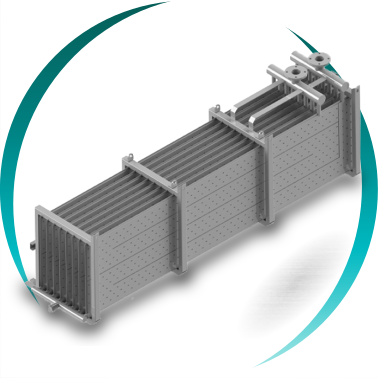
For processes with solids, viscous products, sanitary applications and industrial tanks. Fully welded construction, no gaskets. Works in immersion, in exterior contact and as a thermal jacket. Generally admits pressures above 100 bar and temperatures typically above 600°C depending on the material.
View technology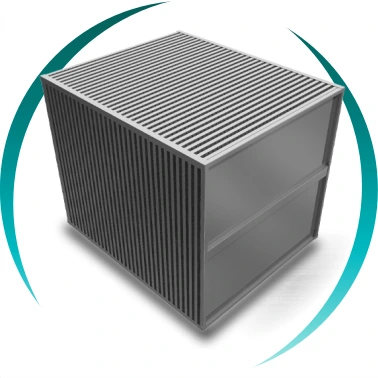
For heat recovery between clean gas streams without particles. Typically below 300°C. Requires completely clean gases: any fouling or particles can compromise its performance.
View technology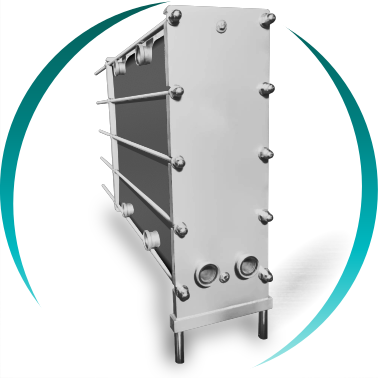
For clean, low-viscosity, particle-free liquid fluids. High thermal efficiency in limited space. Dismantlable for cleaning and capacity expansion. Generally up to 25 bar and between 130°C and 180°C depending on gasket type.
View technologyFrequently asked questions about plate heat exchangers
Do all plate heat exchangers work in the same way?
No. They share the principle of transfer through metal plates, but the three technologies differ radically in construction, application and operating range.
The term “plate heat exchanger” groups technologies that are not interchangeable. The pillow plate generally handles solids, viscous products and direct product contact, and typically admits pressures and temperatures far above those of gasketed plates. The cross-flow recuperator is exclusively for clean gases and cannot be used with liquids or gases containing particles or fouling. The gasketed plate-and-frame is very efficient for clean fluids but generally struggles with particle-containing or viscous products.
Is the pillow plate heat exchanger a conventional plate heat exchanger?
No. The pillow plate is a fully welded, gasket-free construction designed for processes that conventional plate heat exchangers typically cannot handle.
Unlike a gasketed plate-and-frame — where plates are held by a frame and elastomeric gaskets that limit pressure, temperature and chemical compatibility — the pillow plate is a hydraulically inflated metal plate, fully welded, with no elastomeric element. This generally allows it to operate at pressures above 100 bar and at temperatures typically above 600°C depending on the material, in contact with fluids that could be incompatible with conventional gaskets, and in sanitary applications where the presence of gaskets could be a hygiene risk.
When is the cross-flow recuperator suitable and when is it not?
When the two streams involved are completely clean gases without particles, typically below 300°C. Not suitable for liquids or gases with fouling.
The cross-flow recuperator is the appropriate solution when the process involves recovering heat between two clean gas streams with no presence of particles, condensates or substances that could deposit on the plates. Any fouling can significantly compromise the performance of the equipment. It is not suitable for any application with liquid fluids or gases that cannot guarantee adequate cleanliness.
For which processes is a gasketed plate heat exchanger generally not recommended?
For fluids with particles, viscous products, pressures above 25 bar, temperatures above 180°C and fluids that may be aggressive to the gaskets.
The gasketed plate-and-frame is generally appropriate for clean, low-viscosity liquid fluids, but has clear limitations. Channels between plates typically block with particles of significant size. Gasket resistance limits service pressure and maximum temperature, and some fluids can degrade elastomeric gaskets. For viscous fluids, the flow regime may not generate sufficient turbulence to maintain a good transfer coefficient. For all these cases, the pillow plate or a tubular heat exchanger are generally more suitable alternatives.
Can the pillow plate replace an existing gasketed plate heat exchanger?
In many cases it is a viable alternative, especially when the gasketed plate exchanger presents problems of blockage, fouling or gasket degradation.
In installations where a gasketed plate-and-frame experiences shutdowns from channel blockage, gasket degradation or scale fouling, the pillow plate may be worth considering as a replacement. Its welded construction eliminates gaskets as a risk element, and its channel geometry typically allows a greater free passage. BOIXAC analyses the conditions of the existing installation and proposes the pillow plate configuration best adapted to the available space and hydraulic circuit.
What temperature range do the three plate technologies typically admit?
Pillow plate typically above 600°C; cross-flow typically below 300°C; gasketed plate typically between 130°C and 180°C depending on the gaskets.
The pillow plate, fully welded in stainless steel or special materials with no elastomeric element, typically admits temperatures above 600°C depending on material and service pressure. The cross-flow recuperator, designed for clean gases, typically operates below 300°C and its main limitation is not so much temperature as the need for absolutely clean gases. The gasketed plate-and-frame depends on gasket type: NBR gaskets typically reach 130°C, EPDM gaskets 150°C and HNBR or FKM gaskets 180°C under normal operating conditions.
Plate heat exchanger projects specified by BOIXAC
- Electropolished AISI 316L stainless steel pillow plate coils for sparkling wine cooling in 23 culture tanks with a load of up to 142,000 litres, compliant with MOCA regulations
- Exterior-contact pillow plate heat exchangers for green coffee and seed cooling in high-capacity food industry installations
- Cross-flow recuperators for energy recovery between clean gas streams in industrial drying and air conditioning processes
- Pillow plate thermal jackets for crystallisation reactors in the chemical industry, with temperature gradient control
Do you need a plate heat exchanger for your process
The BOIXAC technical team analyses fluid properties, process conditions, sanitary or regulatory requirements and installation constraints, and specifies the most suitable plate technology: pillow plate, cross-flow recuperator or gasketed plate-and-frame.
We work with plant engineers, process managers and OEM equipment manufacturers across Europe.