
Industrial air-to-air heat exchanger
The air-to-air heat exchanger is an industrial thermal exchanger designed for energy recovery between two separate air streams, using expanded tube technology against end plates, achieving gas tightness of approximately 99%, with excellent tolerance to high temperatures and highly fouled environments.
Thermal energy recovery in industrial processes with high-temperature air and heavy fouling
These units make it possible to recover the energy contained in hot exhaust air or process air to preheat clean supply air, transforming an inevitable energy loss into reusable useful energy, with a direct and measurable impact on:
reduced energy consumption,
lower operating costs,
reduced CO₂ emissions,
and improved overall energy efficiency of the installation.
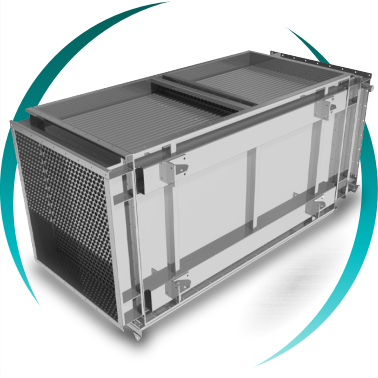
Technological positioning within the gas heat exchanger cluster
The air-to-air heat exchanger:
Uses expanded tubes (no welding)
Provides high gas tightness (~99%)
Allows fouling and the integration of cleaning systems
Is highly suitable for high-temperature operation
Unlike:
The air-to-flue gas heat exchanger, with welded tubes and 100% gas tightness
The crossflow plate heat recovery unit, which does not tolerate fouling
Optimized crossflow architecture for demanding industrial processes
Thanks to a gas–gas crossflow configuration, designed using advanced thermal and mechanical engineering criteria, BOIXAC air-to-air heat exchangers can achieve thermal recovery efficiencies of up to 80%, positioning them among the best ROI solutions in industrial energy efficiency.
The absence of welding between tubes and plates minimizes mechanical stress, making this technology a particularly robust option for intensive thermal cycles, very high temperatures, and severe operating conditions.
When to choose an air-to-air heat exchanger
The air-to-air heat exchanger is the optimal solution when it is necessary to:
Recover thermal energy between air streams
Operate at high temperatures
Handle high fouling levels
Maintain near-total separation between flows
Ensure long-term mechanical stability
In processes involving polluting combustion gases, absolute 100% tightness requirements, or very strict environmental regulations, it is more appropriate to select an air-to-flue gas heat exchanger with welded tubes.
The correct selection of the heat exchanger mainly depends on:
Gas temperature,
Fouling level,
Safety requirements,
Specific process conditions.
Operation of the air-to-air heat exchanger
Operation is based on a controlled gas–gas thermal exchange, in which two air streams flow through independent channels, separated by an optimized heat transfer surface:
The hot air releases part of its thermal energy
The incoming cold air absorbs this energy
There is no direct contact between air streams
High system tightness is maintained
This principle allows:
Recovery of energy from exhaust air or process air
Stable operation with large air flow rates
Reduction of required power in HVAC systems and industrial processes
Integration into existing installations without interrupting production
Key advantages for industry
BOIXAC air-to-air heat exchangers are designed for continuous, energy-intensive industrial processes, delivering direct benefits:
- Significant energy savings
Reduction in operating costs
Lower CO₂ emissions
Improved overall process performance
Increased industrial competitiveness
Integration with advanced automation and control systems
Typical industrial applications
BOIXAC air-to-air heat exchangers are particularly suitable for:
Food industry: dryers, dehydration, thermal treatments
Pulp and paper industry: heat recovery from hot air in ovens and dryers
Chemical and pharmaceutical industry: process air and thermal control
Agriculture and greenhouses: energy optimization of climate control systems
Ceramics, foundries, and metallurgy: high-temperature processes
Design, innovation and construction features
Modular and fully custom design
Single or multiple crossflow configurations, defined using real process data.
Expanded tube technology
Weld-free mechanical joint that reduces thermal and mechanical stress, ideal for high temperatures and demanding environments.
High-resistance materials
Material selection based on temperature, corrosiveness, and expected service life.
Accessible maintenance
Inspection doors, cleaning access points, and automatic spray cleaning options.
Energy efficiency and sustainability
Efficiencies up to 80% and typical ROIs between 3 and 12 months.
Advanced tightness
Mechanical sealing systems that ensure up to 99% tightness.
Typical ROI
3-12 months
Efficiency
up to 80%
Warranty
2 years
Airtightness
up to 99%
FAQs
What is an air-to-air heat exchanger?
It is an industrial heat exchanger that recovers heat between two separate air streams.
It allows thermal energy to be transferred from exhaust or process air to clean supply air, improving energy efficiency without mixing air streams.
How does it differ from an air-to-flue gas heat exchanger?
In terms of technology and tightness.
The air-to-air exchanger uses expanded tubes (≈99% tightness) without welding, whereas the air-to-flue gas exchanger uses welded tubes with 100% gas tightness.
Is it suitable for high temperatures and fouling?
Yes, especially suitable.
The absence of welding minimizes mechanical stress, making it ideal for very high temperatures and highly fouled environments.
What performance can it achieve?
Up to 80%.
Performance depends on temperatures, flow rates, and configuration, but it enables significant energy reductions in industrial applications.
Can it be custom-designed?
Yes, fully.
Each unit is designed according to real process conditions, available space, and operational requirements.
What maintenance is required?
Simple and accessible.
It includes inspection doors and automatic cleaning options, reducing downtime.
What materials are used?
Carbon steel and stainless steels.
AISI 304, 316, 309, and 310, selected according to temperature, corrosion, and gas composition.
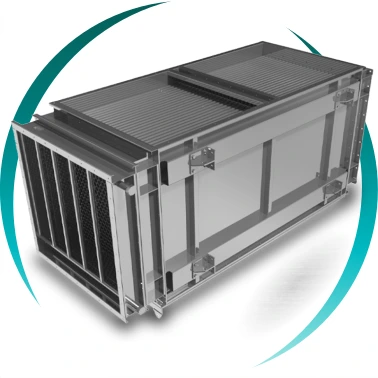
Flue gas heat exchanger
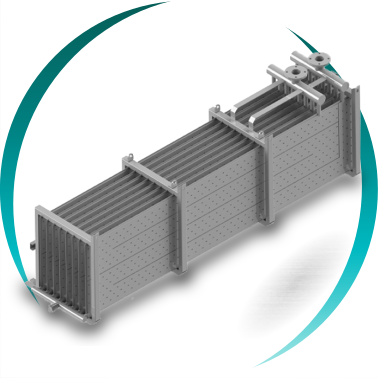
Dimple plate heat exchanger
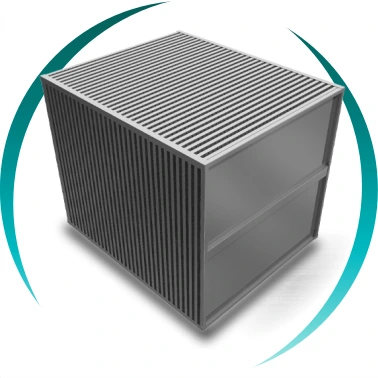
Crossflow heat recovery unit