A special heat exchanger is a heat exchange system specifically designed to meet thermal, mechanical, or functional requirements that cannot be addressed by standard exchangers.
Custom heat exchange solutions for critical industrial applications
It includes customized configurations such as:
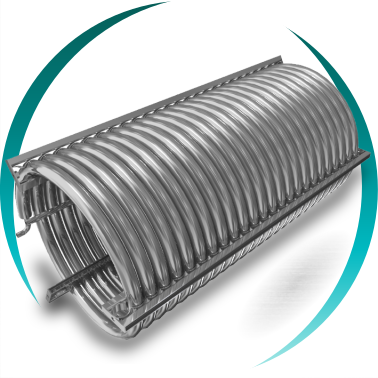
Cooling jackets for tanks and reactors
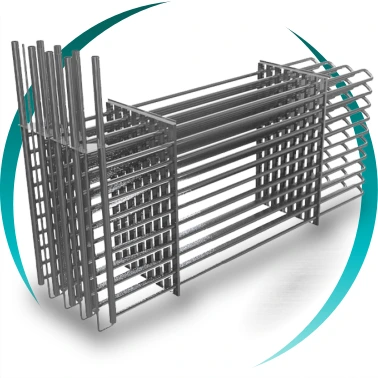
Ice production and thermal storage systems
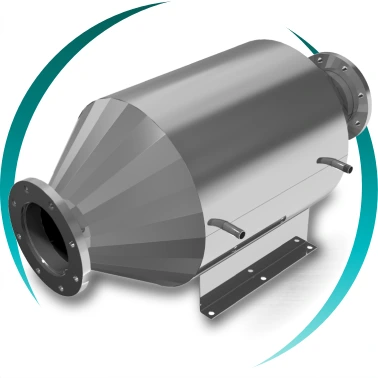
Heat exchangers with pressurized shells for gases
Tubular coils or plates adapted to specific processes
These units are engineered to integrate precisely into industrial environments where heat transfer is a critical factor for quality, efficiency, or safety.
When is a special heat exchanger required?
A special heat exchanger is the appropriate solution when there are:
Non-conventional tank geometries
Processes with variable or intermittent thermal loads
The need for thermal energy storage
Operation in pressurized gaseous environments
Strict hygiene or chemical compatibility requirements
Space constraints or structural integration limitations
In these cases, custom design makes it possible to optimize the overall heat transfer coefficient (U), reduce energy losses, and improve process performance.
Main types within special heat exchangers
The following types are not interchangeable solutions, but specific technical responses to specific needs.
Cooling jacket and heat exchange coil
Typical applications
System installed in tanks or reactors to precisely control product temperature.
Main objective: thermal stability and product quality control.
Alcoholic and malolactic fermentation
Dairy processes
Exothermic chemical reactions
Viscosity control in sensitive fluids
Ice machine / thermal storage unit
Typical applications
Thermal energy storage system that produces ice during off-peak hours and uses it later to cover refrigeration demand peaks.
Main objective: energy optimization and reduction of installed power.
Industrial refrigeration
Large-scale HVAC systems
Refrigerated logistics centers
Integration with renewable energy sources
Pressurized heat exchanger
Typical applications
Heat exchanger integrated within a shell dimensioned to operate with aeriforms or gases at medium or low pressure.
Main objective: safe heat transfer in pressurized environments.
Compressed air
Technical gases
Chemical processes
Automotive and aerospace
Engineering criteria in the design of special heat exchangers
Technical sizing is based on:
Thermal load (kW)
Temperature differential (ΔT)
Thermophysical properties of the fluid
Operating and design pressure
Chemical compatibility
Flow regime (laminar or turbulent)
Allowable pressure drop
Material selection may include:
Carbon steel
Stainless steel (AISI 304, 316L)
Cupronickel
Titanium
Special alloys
Each configuration is defined according to applicable standards and specific process conditions.
It is a custom-designed heat exchanger intended to meet technical needs that standard equipment cannot solve.
It includes solutions such as cooling jackets, ice storage units, or pressurized heat exchangers, adapted to specific process, geometry, or pressure conditions.
When is a special heat exchanger required?
When the process involves non-conventional thermal or mechanical requirements.
It is necessary in applications with complex geometries, variable thermal loads, specific pressures, or high sanitary and chemical demands.
Can it be integrated into an existing plant?
Yes.
Special heat exchangers are designed to adapt to space constraints, hydraulic connections, and structural requirements of the installation.
What advantages does it offer compared to a conventional system?
Greater efficiency and process adaptation.
It enables optimization of heat transfer, reduction of energy consumption, and improvement of operational stability through a specific design.
Thermal engineering focused on critical processes
Special heat exchangers represent the highest level of customization within heat exchange technology.
When the industrial process demands precision, efficiency, and structural safety, custom design ceases to be an option and becomes a technical necessity.
This range of solutions constitutes the core of specialized heat exchange applications in demanding industrial environments.