Industrial cold jacket for cooling tanks, reservoirs and reactors
An industrial cooling jacket is a heat exchange system installed on the inside or outside of a tank that allows process fluids to be cooled or heated by circulating a thermal fluid (glycol water, chilled water, steam, thermal oil, etc.).
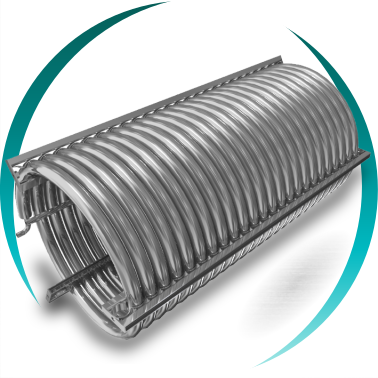
Heat exchange coil for tanks and reactors
It is mainly used in processes with critical thermal control such as fermentations, chemical reactions, macerations, dissolutions, or isothermal product maintenance.
Strategic function in industrial processes
Precise thermal control is essential to:
Stabilize reaction kinetics
Control alcoholic and malolactic fermentations
Ensure texture, aroma, and organoleptic quality
Prevent overheating in exothermic processes
Maintain optimal viscosities
A properly sized cooling jacket maximizes the overall heat transfer coefficient (U) and reduces process time.
Maintains tight temperature tolerances in sensitive processes.
Adaptable integration
Suitable for existing or newly manufactured tanks.
Modular design
Customizable configuration according to process requirements.
Industrial hygiene
Smooth surfaces, continuous welds, and ease of cleaning.
Long service life
Materials resistant to corrosion and demanding conditions.
Main industrial applications
Winemaking and brewing industry
Dairy processes
Chemical industry
Energy, oil and gas
Sugar refining
Agrochemicals
Textile processes
Naval and marine plants
Food and beverages
Typical ROI
3-12 months
Control
very precise
Warranty
2 years
Design
modular
FAQs
What is a cooling jacket?
It is a heat exchange system installed on a tank that allows the product to be cooled or heated by means of a thermal fluid.
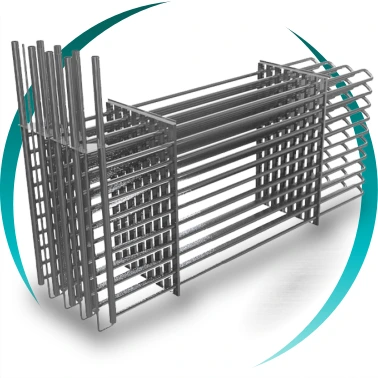
It operates through a pillow or dimple plate, or through a serpentine or coil that transfers heat between the service fluid and the product, maintaining precise control of the process temperature.
How does a heat exchange coil work?
A thermal fluid circulates through the coil, transferring heat to or removing heat from the product.
Heat transfer occurs by conduction through the tube wall and by convection on each fluid side, depending on the hydraulic regime and the temperature differential.
In which processes is it essential?
Fermentations, chemical reactions, and processes with critical thermal control.
In exothermic processes or those sensitive to temperature variations, the cooling jacket prevents deviations that could affect quality, performance, or safety.
Can it be adapted to an existing tank?
Yes.
It can be manufactured with different diameters and configurations to adapt to the available space and the hydraulic requirements of the installation.
What is the difference between pillow plates and smooth tubes?
Pillow plates offer greater adaptability and easier cleaning, while smooth tubes may involve fewer welds.
The pillow plate or dimple plate heat exchanger increases the effective surface area and improves performance in fluids with low convection, while smooth tubes can be manufactured minimizing welding points.