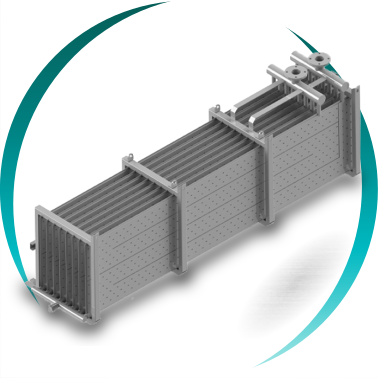
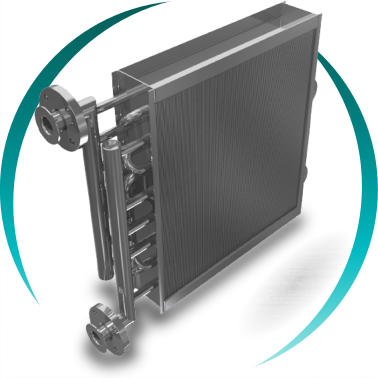
Heat exchangers for the beverage and drink industry

Heat exchangers in the beverage industry are critical systems for controlling temperature in processes such as pasteurization, fermentation, carbonation, and industrial refrigeration. Proper thermal engineering ensures food safety, organoleptic stability, and energy efficiency, reducing specific consumption (kWh/m³) and ensuring operational continuity in production environments with high sanitary requirements.

Why is thermal control decisive in the beverage industry?

In this sector, temperature not only affects energy performance, but directly impacts:

  • Microbiological safety
  • Sensory profile (aroma, texture, carbonation)
  • Protein and colloidal stability
  • Product shelf life
  • Compliance with food regulations

Heat transfer must be precise, repeatable, and hygienically safe.

Thermal architecture of a beverage plant

Although processes vary (soft drinks, beer, wine, dairy, plant-based beverages, juices), the thermal architecture usually includes:
  • Preparation and dissolution of ingredients
  • Thermal treatment (pasteurization / sterilization)
  • Rapid cooling
  • Controlled fermentation (if applicable)
  • Storage refrigeration
  • CIP cleaning (Cleaning In Place)

Efficient heat transfer is involved in all these stages.

Classification of heat exchangers in the beverage industry

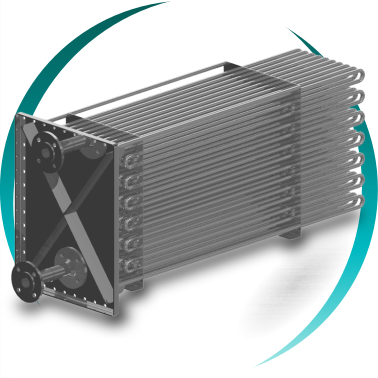
Smooth tube heat exchangers

Typical application:

  • Submerged in tanks
  • Cooling jackets
  • Ice generators
  • Treatment of viscous products (creams, sauces, dairy bases)

Advantages:

  • Simplified cleaning
  • Food-grade compatibility
  • Low surface roughness

Typical ranges:

  • Process temperature: -5 °C to 150 °C
  • Pressures: up to 16 bar depending on the application

Pillow plate heat exchangers

Especially suitable for:

  • Fermentation tanks
  • Storage tanks
  • Uniform cooling

Technical benefits:

  • Homogeneous cold distribution
  • Smooth profiles suitable for CIP cleaning
  • High mechanical resistance
  • Configuration flexibility

Critical application in:

  • Alcoholic fermentation control
  • Rapid post-pasteurization cooling

Finned tube heat exchangers (evaporators / condensers)

Fundamental in:

  • Industrial refrigeration
  • Fermentation rooms
  • Cold storage chambers
  • Glycol systems

Technical characteristics:

  • High specific surface area
  • Possibility of fin spacing greater than 7 mm to reduce fouling
  • Defrost optimization

Critical processes where heat exchangers are involved

Pasteurization

Objective:
Eliminate pathogenic microorganisms while maintaining sensory quality.

Typical ranges:

  • 60–95 °C depending on the product
  • Precise time-temperature control

Thermal uniformity is essential to avoid cold spots.

Fast cooling

After thermal treatment, the product must quickly decrease in temperature to:

  • Prevent microbial growth
  • Preserve volatile aromas
  • Stabilize proteins

Heat transfer rate is decisive.

Controlled fermentation

In beer, wine, and fermented beverages:

  • Strict control between 10–25 °C
  • Avoidance of thermal deviations
  • Management of metabolic heat generated by yeast

An inadequate thermal system alters the organoleptic profile.

Carbonation

In carbonated beverages:

  • CO₂ solubility depends on temperature
  • Lower temperatures improve absorption
  • Thermal control directly impacts bubble quality

Sanitary and regulatory requirements

In the beverage industry, equipment must comply with:

  • Materials suitable for food contact
  • Easily hygienizable surfaces
  • Compatibility with CIP systems
  • Resistance to alkaline and acidic cleaning products
  • Absence of dead zones

Hygienic design is as critical as thermal performance.

Economic and operational impact

Optimized thermal engineering allows:

  • Reduction of specific energy consumption (kWh/m³)
  • Improvement of fermentation stability
  • Reduction of reprocessing due to thermal deviations
  • Increase in product shelf life
  • Minimization of downtime for maintenance

In high-production environments, small improvements in the overall heat transfer coefficient generate significant annual impact.

Critical technical variables in design

  • Overall heat transfer coefficient (U)
  • Logarithmic mean temperature difference (LMTD)
  • Flow rate and flow regime
  • Product viscosity
  • Possible fouling
  • Chemical compatibility

Correct selection requires specific thermal calculation for each application.

Bescanviador de calor a mida

Custom solutions specially designed for the beverage sector.

Intercanviador de calor Green Next Generation

We prepare quotations with precision and rigor.

Intercanviador de calor certificat

Products subjected to strict quality control.

Intercanviador de calor urgent

Agile and on-time response to minimize plant impact.

FAQs

What is the main function of a heat exchanger in beverages?

To control temperature in order to guarantee food safety and sensory quality.

To transfer heat precisely in processes such as pasteurization, fermentation, or refrigeration, ensuring microbiological and organoleptic stability.

Why is hygiene critical in this equipment?

To prevent contamination and comply with food regulations.

Hygienic design, CIP compatibility, and the absence of dead zones are essential to prevent biofilms and cross-contamination.

Which process is the most thermally demanding?

Pasteurization and the immediate cooling that follows.

The need to maintain a strict time-temperature profile requires high transfer uniformity and precise flow control.

Value proposition for technical management and production

In the beverage industry, thermal control is not only an energy issue, but also a matter of brand quality.

An optimized thermal architecture allows:

  • Greater product stability
  • Reduction of microbiological incidents
  • Optimization of energy costs
  • Robust regulatory compliance
  • Production scalability