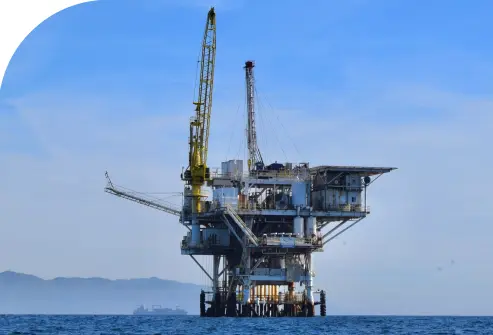
A heat exchanger in the Oil & Gas sector is equipment designed to transfer thermal energy between two or more fluids without physical mixing, under severe conditions of pressure, temperature, corrosion, and regulatory requirements, with the objective of controlling processes, recovering energy, and ensuring operational safety.
Strategic role in the Oil & Gas value chain
Strategic role in the Oil & Gas value chain
The oil and gas industry comprises three main phases:
Upstream: exploration and production
Midstream: transportation, compression, and storage
Downstream: refining and petrochemical processing
In all phases, thermal control is critical for:
Process stability
Overall energy performance
Mechanical integrity of equipment
Regulatory compliance
OPEX reduction
Applications by operational phase
Upstream
Exploration and production
Post-separation natural gas cooling
Gas dehydration
Crude stabilization prior to transport
Thermal control in high-pressure separators
Midstream
Transportation and compression
Aftercoolers
Heat exchangers in LNG terminals
Thermal control in pumping stations
Downstream
Refining and petrochemicals
Column reboilers
Fractionation condensers
Boiler economizers
Flue gas heat recovery units
Steam turbine superheaters
Real operating conditions in Oil & Gas environments
Heat exchangers may operate under:
Typical pressures from 20 to >100 bar depending on service
Process gas temperatures that may exceed 800–900 °C in recovery or superheating applications
Atmospheres classified according to the ATEX Directive
Installations subject to the Pressure Equipment Directive
Presence of H₂S, CO₂, sulfur, chlorides, and marine environments
Thermal cycles with high gradients and associated fatigue
Design must consider:
Thermal calculation (LMTD or ε-NTU method)
Determination of the overall heat transfer coefficient U
Structural verification according to EN 13445 or ASME VIII Div.1/2
Analysis of thermal expansion and stresses
Material selection according to corrosion and expected service life
Types of heat exchangers used in refineries and petrochemical plants
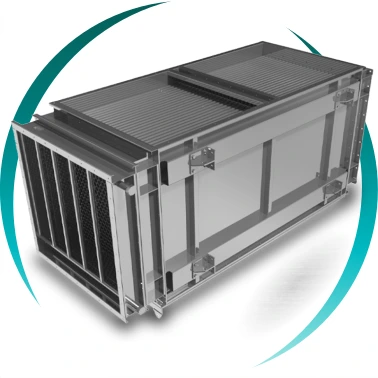
Economizer
They recover heat from exhaust gases of boilers, HRSG units, or process furnaces to:
Preheat feedwater
Reduce fuel consumption
Increase overall efficiency
In continuous environments, thermal recovery can have a direct impact on energy OPEX.
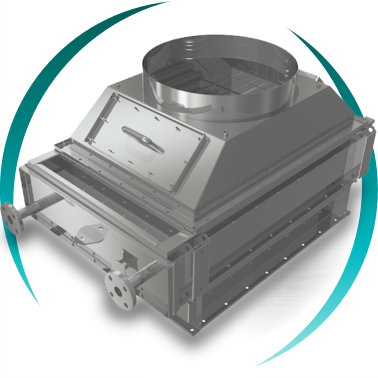
Gas heat exchanger
Designed for:
Energy recovery in combustion gases
Post-compression cooling
LNG applications
Especially relevant when both streams are gaseous and the temperature difference allows efficient recovery.
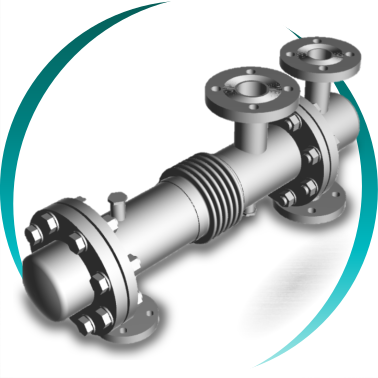
Shell & Tube heat exchanger
Typical applications:
High pressure
Condensation and reboilers
Large flow rates
Corrosive fluids
Energy recovery and impact on OPEX
In refineries and petrochemical plants, a significant portion of energy may be dissipated as residual heat if not recovered.
The integration of economizers or recovery units allows:
Reduction of fuel consumption
Improvement of overall thermodynamic efficiency
Reduction of CO₂ emissions
Lower operating costs
The payback period depends on:
Available thermal load
Operating regime (continuous/discontinuous)
Local energy cost
Integration with the rest of the system
Regulatory compliance and document traceability
Oil & Gas projects may require:
Design according to EN 13445 or ASME VIII
Compliance with the Pressure Equipment Directive 2014/68/EU
Application of the ATEX Directive
3.1 material certificates according to EN 10204
Non-destructive testing (PT, UT, RT depending on criticality)
Full material traceability
Document validation is as critical as thermal calculation.
Advanced selection criteria
It is determined by:
Design pressure and temperature
Chemical nature of the fluid
Required thermal load
Available space and maintainability
Inspection requirements
Expected service life
Overall plant energy integration
Industry decision-oriented approach
In real refinery and petrochemical environments with ATEX classification, preliminary thermal analysis allows:
Identification of recovery opportunities
Reduction of operational risk
Optimization of combustion cycles
Improvement of equipment availability
A proper technical study reduces uncertainty in CAPEX and OPEX.
Tailor-made solutions specifically designed for the Oil & Gas sector.
We detail budgets with precision and rigor.
Products subject to strict quality control.
Agile and on-time response to minimize plant impact.
FAQs
What is a heat exchanger in Oil & Gas?
It is equipment that transfers energy between fluids without mixing to control processes under high pressure and temperature.
In Oil & Gas, its design integrates thermal calculation (LMTD or NTU), structural verification according to EN or ASME, and compliance with PED and ATEX regulations. It can operate with corrosive fluids and under severe thermal cycling conditions.
Why is heat recovery critical in a refinery?
To reduce energy consumption and emissions.
Combustion gases contain usable thermal energy. Through economizers or recovery units, this energy is reintegrated into the process, improving overall performance and reducing OPEX.
Can they operate in ATEX atmospheres?
Yes, if they comply with the corresponding zone classification.
The design must consider the ATEX Directive, avoid uncontrolled hot spots, and integrate with plant protection systems according to risk classification.
What temperatures can they reach?
It depends on the service and selected materials.
In superheating or high-temperature gas recovery applications, they can operate at very high ranges, always conditioned by alloy selection, thermal expansion, and allowable mechanical stresses according to the design code.
Which design codes apply?
EN 13445 or ASME VIII, depending on the project.
Structural calculations may be performed internally or with external support depending on criticality, ensuring compliance with the Pressure Equipment Directive and full document traceability.
Technical conclusion
Heat exchangers in the Oil & Gas sector are not merely thermal transfer equipment: they are critical elements for safety, energy efficiency, and operational profitability in environments with high regulatory and mechanical demands.