A heat exchanger for the sugar industry is an industrial piece of equipment designed to transfer thermal energy in a controlled manner between liquids, gases, or vapors during the purification, crystallization, and evaporation processes of sugar. These systems make it possible to concentrate the juice, recover residual heat, optimize energy consumption, and increase the sustainability of sugar plants.
It typically works with:
Crystallization water vapor
Water and juices from beet or cane
Combustion gases from boilers and furnaces
Preheated combustion air
Thermal fluids for auxiliary processes
In the sugar industry, thermal management is key to maximizing energy efficiency, sugar quality, and plant availability.
Thermal solutions for concentration, evaporation, and steam generation processes
Sugar production involves several critical stages:
Juice extraction: crushing and milling of cane or beet
Purification: removal of impurities and clarification
Crystallization and evaporation: concentration of sugar and separation of water
Cooling and condensation: recovery of steam for energy reuse
The use of bagasse as fuel for industrial boilers allows the generation of steam to drive turbines, making heat management a strategic and sustainable element.
On the other hand, heat recovery units and industrial economizers improve the energy efficiency of industrial boilers that drive turbines by preheating the air. The requirement to use bagasse as a fuel source demands a special design approach in which Boixac Tech specializes.
The sugar industry: energy demand and operational efficiency
Critical points in terms of thermal transfer are:
Evaporators and crystallizers
Biomass boilers (bagasse)
Steam turbines
Furnaces and combustion systems
Exhaust gases with particles and residual juice
Without efficient heat exchangers and heat recovery systems, the following occur:
Significant energy losses
Reduced production capacity
Increased operating costs
Lower sustainability and greater environmental impact
Key applications of heat exchangers in the sugar industry
Concentration and crystallization
Evaporation of water, maintaining quality
Heat exchangers make it possible to evaporate the water from the juice without degrading the quality of the sugar.
The generated steam can be cooled and condensed in order to reuse it in earlier processes, increasing overall efficiency.
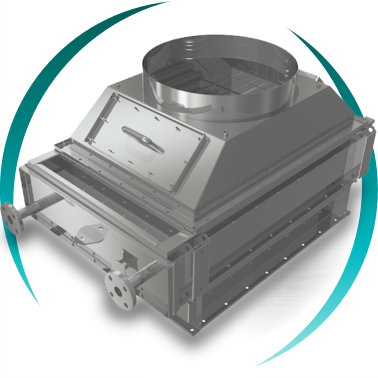
Heat recovery unit
Economizers: efficiency and sustainability
Extraction gas recovery units: preheat combustion air for boilers and furnaces.
Industrial economizers: increase turbine efficiency and reduce fuel consumption.
Integration with biomass and other renewable sources to optimize sustainability.
Cooling and maintenance
Maintenance of viscous processes
Pillow plate and finned-tube heat exchangers allow temperature control of dense juices or those containing sediments.
Smooth and compact profiles facilitate cleaning and CIP/SIP maintenance.
They prevent adhesion and product degradation during evaporation and condensation.
Types of heat exchangers for the sugar industry
Boiler economizer (water, thermal oil, and steam)
Recovers heat from extraction gases
Preheats the inlet air for furnaces and turbines
Design adaptable to solid fuels such as bagasse
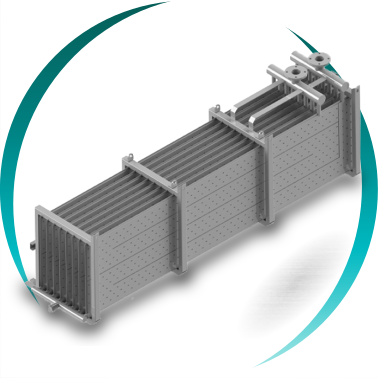
Pillow plate heat exchanger (dimple plate)
Innovative “buttoned” or cushion system
Compact and with a smooth profile
Ideal for viscous sauces, humid gases, and sticky liquids
Facilitates maintenance and optimizes thermal efficiency
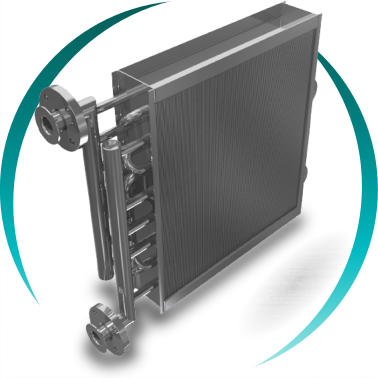
Finned-tube heat exchanger (fins and tubes)
Smooth or finned tubes for cooling, heating, evaporation, or condensation
Suitable for dusty gases or liquids with sediments
Optimize heat transfer in intensive processes
Engineering and industrial reliability
Heat exchangers intended for the sugar sector require:
Precise thermal and steam flow calculations
Materials resistant to erosion and high humidity
Design that facilitates inspection and automatic cleaning
Capacity to withstand flows with concentrated sugar and residues
Industrial certifications and traceability:
Qualified materials and welds
Documented procedures
Non-destructive testing
Quality dossiers
Strategic benefits for the sugar industry
Recovery of residual heat and reduction of energy consumption
Efficient preheating of air and steam
Controlled and homogeneous cooling of sugar
Improved product quality and stability
Reduced emissions and environmental sustainability
Tailor-made solutions specially designed for the sugar sector.
We detail quotations with precision and rigor.
Products subjected to strict quality control.
Agile and on-time response to minimize impact on the plant.
FAQs
What is a heat exchanger in the sugar industry?
Equipment that transfers heat to concentrate juice, recover steam, and improve energy efficiency.
It allows evaporation of water from cane or beet juice, recovery of residual heat, and optimization of bagasse use as fuel, ensuring process stability and sustainability.
How do they contribute to sustainability?
They reuse heat and reduce fuel consumption.
Recovery units and economizers preheat air and steam, reducing the energy consumption of boilers and turbines and lowering emissions, improving the overall efficiency of the sugar plant.
Which types are most commonly used?
Pillow plate, finned tubes, and boiler economizers.
Pillow plate exchangers provide uniformity and ease of cleaning; finned tubes withstand gases and viscous liquids with sediments; economizers preheat air and steam, optimizing residual heat from furnaces.
What impact do they have on sugar quality?
They ensure controlled and constant cooling.
Controlling temperature during evaporation and crystallization prevents product degradation and internal stresses, ensuring uniform crystals and stable quality.
Heat exchangers for the sugar industry
Solutions adapted to:
Evaporators and crystallizers
Bagasse boilers and combustion furnaces
Steam turbines
Controlled cooling and condensation
Thermal engineering for efficient, sustainable, and safe sugar processing.
Heat exchangers and recovery systems transform residual energy into productive value and operational sustainability.