
Concentric tube heat exchanger (Coaxial)
The concentric tube heat exchanger, also known as a double pipe heat exchanger or coaxial heat exchanger, is a robust, reliable and mechanically resistant industrial heat transfer solution designed to exchange heat between two fluids without mixing.
It is particularly well suited for demanding industrial processes where mechanical strength, high fouling tolerance and ease of maintenance are critical factors to ensure operational continuity and process safety.
At BOIXAC, we offer fully customised concentric tube heat exchangers, engineered according to strict thermal and mechanical criteria, with a clear focus on:
-
Maximising real thermal performance
-
Reducing energy and operating costs
-
Ensuring long service life and high plant availability
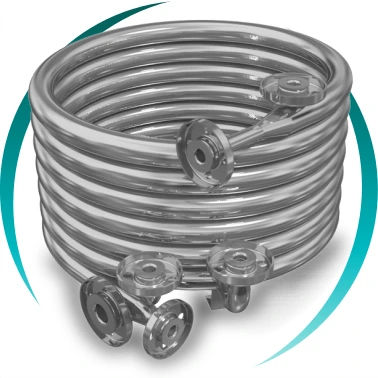
Construction principle: concentrically arranged tubes
This type of heat exchanger is based on a simple yet extremely reliable geometry:
One fluid flows through the inner tube
The second fluid flows through the annular space between the inner and outer tubes
This coaxial arrangement ensures a stable, controlled and predictable heat transfer, with excellent adaptability to:
Different flow rates
Wide temperature ranges
High operating pressures
Complex or non-clean fluids
Even under severe operating conditions, thermal performance remains stable and repeatable.
Operating principle and heat exchange mechanism
The concentric tube heat exchanger operates through indirect thermal contact between two fluids at different temperatures, separated by a high-thermal-conductivity metallic wall.
This wall acts as the heat transfer surface, enabling heat exchange that is:
Efficient
Safe
Continuous
Free from cross-contamination
The tubular design also promotes uniform temperature distribution and precise thermal control of the process.
Flow configurations and thermal efficiency
Depending on process requirements, the heat exchanger can operate in two main flow arrangements:
Counter-current operation
The fluids flow in opposite directions, maintaining a high temperature gradient along the entire length of the exchanger.
Key benefits:
Maximum thermal efficiency
Optimal use of the heat transfer surface
Reduced overall energy consumption
This is the most thermally efficient configuration and the standard choice for continuous industrial processes.
Parallel-flow operation
Both fluids flow in the same direction.
Typical applications:
Processes requiring controlled initial temperature
Thermal stabilisation
Reduction of thermal shock
Suitable when peak efficiency is not the primary design driver.
Preferred fields of applications
Thanks to their operational flexibility, coaxial heat exchangers are especially suitable for:
Continuous industrial processes
Heating operations
Cooling operations
Evaporation
Condensation
Particularly when fluids contain solids, fibres, residues or impurities.
Available configurations
Concentric tube heat exchangers can be manufactured in different configurations:
Single-circuit design
For low to medium thermal duties
Compact design and easy integration
Multi-circuit configurations
Multiple inner tubes operating in parallel within the same assembly
Increased heat transfer capacity
Minimal increase in installation footprint
The compact, modular and scalable design allows easy integration into both new installations and existing systems, precisely adapted to real process conditions.
Decisive comparison between heat exchanger technologies
Key parameter |
Concentric (coaxial) |
Tubular (hairpin) |
Shell and tubes | Gasketed plates (phe) |
|---|---|---|---|---|
Best |
Solids, abrasion, high pressure with simple design |
Viscous fluids, frequent mechanical cleaning |
Extreme P/T conditions (pressure vessels) |
Maximum efficiency with clean fluids |
Mechanical |
Very high (simple design) |
High | Very high | Low |
Tolerance |
Excellent | Very good | Good | Not suitable |
Ease of |
Very easy (straight access) |
Excellent (fully dismantlable) |
Laborious | Laborious |
Main |
Robustness and low clogging risk |
Full mechanical cleaning |
Containment of extreme P/T |
Efficiency and compactness |
Key advantages of concentric tube heat exchangers
High fouling tolerance due to generous internal diameters
Ideal for fluids containing solids, fibres or impurities
Excellent mechanical strength for high pressures and temperatures
Fast and simple maintenance with direct tube access
Stable and reliable operation in continuous processes
Optimised energy efficiency, especially in counter-current configuration
Materials and long-term durability
BOIXAC concentric tube heat exchangers are manufactured using materials selected according to:
Chemical nature of the fluid
Operating temperature
Design pressure
Common materials include:
Stainless steel AISI 304
Stainless steel AISI 316L
Stainless steel AISI 316Ti
Stainless steel AISI 321
Stainless steel AISI 309
Titanium
Nickel-based alloys
This selection ensures chemical, thermal and mechanical resistance, as well as high operational reliability in harsh industrial environments.
Industrial applications
Concentric tube heat exchangers are widely used in:
Food and beverage industry (products with fibres, pulps or suspended solids)
Pharmaceutical industry (controlled thermal processes with high hygiene requirements)
Chemical and petrochemical industry (aggressive fluids, evaporation and condensation)
Water treatment (sediments and impurities)
Energy systems and heat recovery (waste heat utilisation)
Industrial refrigeration, HVAC and cold chain processes
Typical ROI
3-12 months
Ideal for
solids, fibres & residues
Warranty
2 years
Design
custom-made
FAQs
What is a concentric tube heat exchanger?
A heat exchanger in which two fluids flow through concentrically arranged tubes, separated by a metallic wall, allowing heat transfer without mixing.
A concentric or coaxial heat exchanger uses an inner tube and an outer tube to convey fluids at different temperatures. This configuration provides stable thermal performance, high mechanical strength and excellent fouling tolerance, even with complex or dirty fluids.
Which industrial processes are best suited for a double pipe heat exchanger?
Processes involving fluids with solids, fibres or impurities.
It is the preferred solution when the process handles dirty fluids, pulps, cellulose or solid particles, and when high operational reliability is required in heating, cooling, evaporation or condensation duties.
What is the main advantage over a plate heat exchanger?
Robustness and fouling tolerance.
Unlike plate heat exchangers, concentric tube designs offer greater mechanical resistance, lower clogging risk and much simpler maintenance, making them ideal for harsh industrial environments.
Which configuration is the most energy efficient?
Counter-current flow.
Counter-current operation maintains a high temperature gradient along the entire exchanger, maximising heat transfer efficiency and reducing overall energy consumption.
Can concentric tube heat exchangers be fully customised?
Yes, fully customised.
Custom design allows adaptation to flow rates, temperatures, pressures, fluid properties, materials and available space, ensuring optimal thermal performance and efficient system integration.
What maintenance is required for a coaxial heat exchanger?
Low maintenance and easy cleaning.
The tubular design provides direct access to the tubes, simplifying cleaning operations, reducing downtime and extending equipment service life.
Which materials are commonly used in double pipe heat exchangers?
Stainless steels, titanium and nickel alloys.
Material selection depends on pressure, temperature and chemical aggressiveness of the fluid. Common choices include AISI 304, 316L, 316Ti, 321, 309, titanium and specialised nickel alloys.
What return on investment can be expected?
Typically between 3 and 12 months.
The combination of energy efficiency, operational reliability and reduced maintenance costs results in a fast ROI, especially in continuous industrial processes.
When is a concentric tube heat exchanger the best choice?
When maximum robustness and fouling tolerance are required.
It is the optimal solution when process reliability is critical, fluids are not clean and maintenance must be fast, safe and effective.
Why is BOIXAC a reliable supplier of coaxial heat exchangers?
Industrial experience, custom engineering and technical reliability.
BOIXAC conceives and supplies concentric tube heat exchangers based on solid engineering principles, tailored to each industrial process and focused on long-term reliability, ensuring thermal performance, operational safety and a technically sound investment.
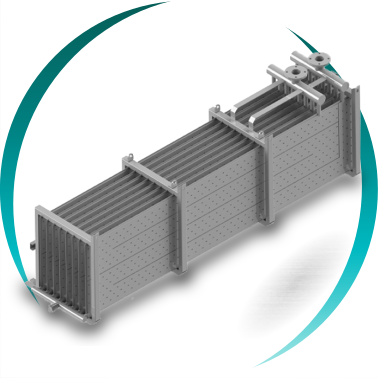
Pillow plate heat exchanger
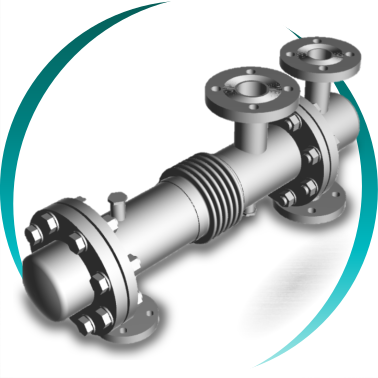
Shell & tube heat exchanger
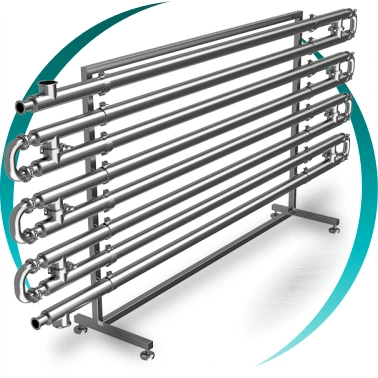
Tubular heat exchanger