
Heat exchangers for the automobile industry
A heat exchanger in the automotive industry is a piece of equipment designed to transfer thermal energy between two or more fluids without direct contact, with the objective of controlling critical production processes, stabilizing manufacturing conditions, and optimizing energy consumption in highly automated industrial environments.
Far from being an auxiliary element, thermal control in automotive manufacturing is a direct driver of quality, efficiency, and profitability. In an industry where repeatability, precision, and operational continuity are essential, any thermal deviation can result in product defects, increased OPEX, or line stoppages.
The role of thermal control in the automotive value chain
The automotive industry is not a homogeneous system, but rather an interconnected network of vehicle manufacturers (OEMs), first-tier suppliers (Tier 1), and an extensive auxiliary industry that includes everything from metallic materials to polymers, coatings, and electronic systems.
Within this ecosystem, temperature management is a transversal factor that directly affects:
- surface quality in painting processes
- dimensional stability in plastics
- mechanical properties in elastomers
- overall plant energy efficiency
Heat exchangers act as an interface between thermal energy sources and production processes, enabling both heat input and heat recovery with controlled precision.
Real applications in automotive manufacturing processes
In painting processes, especially in cataphoresis, base coat, and clear coat lines, temperature control is critical to ensure adhesion, uniformity, and coating resistance. Paint ovens operate under strict thermal profiles, and any variation can lead to surface defects or curing issues. In this context, heat exchangers allow both stabilization of process air and recovery of heat from combustion gases, improving overall system efficiency.
In plastics processing, such as injection molding or extrusion, thermal control of molds is essential to ensure dimensional tolerances and avoid internal stresses. Heat transfer must be fast yet controlled, requiring solutions specifically designed according to geometry, cycle, and material.
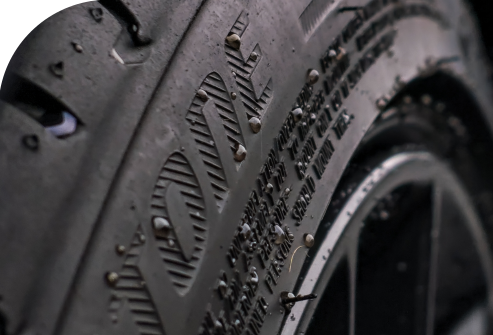
Tire manufacturing introduces a different scenario based on rubber vulcanization. This process involves the combination of heat, pressure, and chemical reactions to achieve the final properties of the tire. The use of steam and hot water is intensive, and heat exchangers play a key role in the generation, distribution, and recovery of this thermal energy.
In addition, there is the plant’s thermal infrastructure: boilers, hot water networks, hot air systems, and cooling circuits. In these systems, heat exchangers enable integration of energy flows, reduction of losses, and stabilization of overall operation.
Operating conditions and technical requirements
Heat exchangers in automotive environments operate under conditions that, while not as extreme as sectors such as Oil & Gas, require very high reliability. It is common to work with steam systems, thermal fluids, and combustion gases across temperature ranges from moderate processes to applications involving several hundred degrees.
Continuous operation, often under 24/7 regimes, introduces strict requirements in terms of thermal fatigue, expansion, and maintenance. Additionally, the presence of chemical compounds in painting or surface treatment processes requires careful material selection.
The design of a heat exchanger in this context is not limited to thermal calculation alone. It involves integrating methodologies such as LMTD or ε-NTU with structural verification, stress analysis, and maintainability criteria, ensuring that the equipment not only fulfills its function but does so reliably over time.
Heat recovery and direct impact on operating costs
One of the most relevant opportunities in the automotive industry is the recovery of residual thermal energy. Processes such as paint ovens or drying systems generate heat flows that, if not recovered, are directly dissipated into the atmosphere.
The integration of economizers or heat recovery systems allows this energy to be reused to preheat air, water, or other process streams. This approach not only reduces fuel consumption but also improves overall efficiency and lowers CO₂ emissions.
From an economic standpoint, this translates into a direct reduction in energy OPEX. The return on investment typically depends on available thermal load, operating hours, and energy costs, but in continuous production environments it can be particularly competitive.

Tailor-made solutions specifically designed for the automotive sector.

We provide fast, on-time response to minimize impact on production.

Products subjected to strict quality control.

Complete service, including transport to the factory.
Regulatory compliance and quality requirements
Although the automotive sector does not always present the same regulatory demands as other heavy industries, heat exchangers may be subject to the Pressure Equipment Directive (PED 2014/68/EU) and design codes such as EN 13445 or ASME VIII.
Beyond regulatory compliance, the critical factor in automotive manufacturing is quality and repeatability. This implies material traceability, manufacturing controls, and, in many cases, non-destructive testing to ensure equipment integrity throughout its service life.
Industrial decision-oriented approach
In an automotive plant, the decision to integrate or optimize a heat exchange system is not based solely on initial CAPEX. It is a strategic decision that affects:
- production line availability
- final product quality
- energy consumption
- operational sustainability
A proper technical study allows identification of improvement opportunities, reduction of uncertainty, and prioritization of investments with real business impact.
BOIXAC solutions for the automotive sector
BOIXAC develops solutions adapted to the real needs of the automotive industry, taking into account both process conditions and plant integration constraints.
Projects may include everything from custom-designed heat exchangers to heat recovery solutions with energy efficiency and economic return criteria. Fast response, equipment reliability, and quality control are at the core of every project.
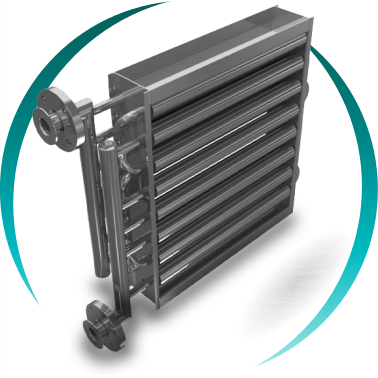
Finned tube heat exchangers
- Helical and continuous fins
- Resistance to high pressures and temperatures
- Compatible with clean steam, purified water, and thermal oil
- Application in HVAC systems and auxiliary processes
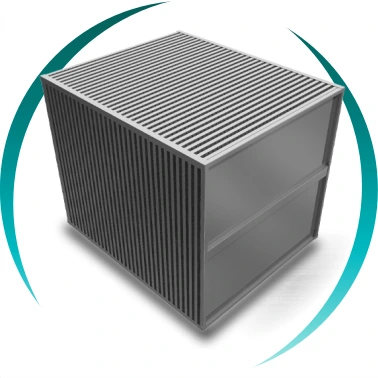
Crossflow heat recovery units
- Air preheating in drying processes
- Design tolerant to controlled fouling
- Integration in critical air treatment lines
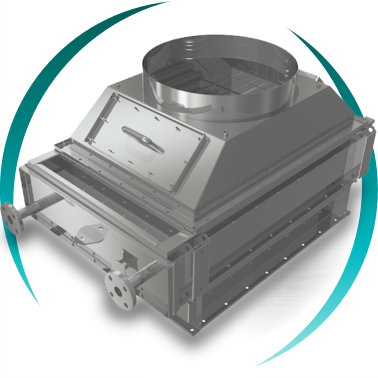
Economizers and energy recovery systems
- Heat recovery from combustion gases
- Feedwater preheating
- Reduction of overall plant energy consumption
FAQs
What is a heat exchanger in the automotive industry?
It is a piece of equipment that transfers heat between fluids without mixing in order to control production processes and improve energy efficiency.
In the automotive sector, heat exchangers are used to stabilize processes such as painting, plastic injection, or tire vulcanization. Their design integrates thermal calculation, material selection, and reliability criteria to operate continuously in demanding industrial environments.
Why is heat recovery important in automotive manufacturing?
To reduce energy consumption and operating costs.
Thermal processes generate residual heat that can be reused through heat exchangers. This recovery reduces fuel consumption, improves overall plant efficiency, and lowers emissions, with a direct impact on OPEX.
In which processes are they mainly used?
In painting, plastics, vulcanization, and steam systems.
They are used in paint ovens, drying booths, injection molds, vulcanization presses, and thermal distribution networks. In all these cases, temperature control is essential to ensure process quality and stability.
What operating conditions can they withstand?
It depends on the design, but they can operate with steam, hot gases, and thermal fluids.
Temperature and pressure ranges vary depending on the application, but the design must consider thermal cycles, corrosion, and mechanical stresses. Material selection and structural calculation are key to ensuring durability.
What standards and regulations apply?
Mainly PED, EN 13445, or ASME VIII.
These codes regulate the design and manufacture of pressure equipment. Additionally, material certificates, traceability, and non-destructive testing may be required to ensure equipment quality and safety.