
Pressurized heat exchanger for compressed gases
A pressurized heat exchanger is a heat exchanger integrated within a shell designed to operate in a gaseous or aeriform environment at medium or low pressure, allowing gases to be heated, cooled, or dehumidified without compromising the structural safety of the system.
Shell-and-tube heat exchanger for aeriforms and compressed gases
Unlike conventional air-sealed frames, this type of equipment is designed to withstand mechanical loads caused by internal pressure, ensuring tightness, strength, and operational stability.
Technical function and industrial value
The pressurized heat exchanger allows thermal transfer between a service fluid (water, glycol, steam, thermal oil) and a compressed or aeriform gas under controlled pressure conditions.
It is especially relevant in applications where:
Gas cannot be released into the atmosphere
Thermal control is required in closed circuits
There is a risk of cross-contamination
Structural safety is critical
It provides a robust solution for processes with mechanical requirements exceeding those of open or atmospheric systems.
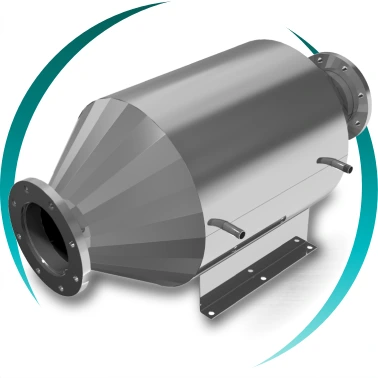
System architecture
1. Pressure shell
The shell is designed according to:
Operating pressure
Design pressure
Operating temperature
Applicable standards
It can be manufactured in:
Stainless steel (AISI 304, 316L)
Titanium
The structural design ensures:
Total tightness
Fatigue resistance
Compatibility with corrosive gases
2. Internal exchange core
The interior of the shell can integrate different heat transfer technologies:
Continuous tubes and fins
Helical fins
Welded transverse fins
Smooth tubes
Pillow plate systems
This versatility allows optimization of the overall heat transfer coefficient (U) according to:
Gas flow rate
Flow regime (laminar/turbulent)
Allowable pressure drop
Condensation or dehumidification conditions
Main industrial applications
Automotive
Aviation and aerospace
Food and beverage
Chemical industry
Industrial HVAC
Gas refrigeration
Purification systems
Compressed air processes
Difference between pressurized heat exchanger and conventional exchanger
| Conventional heat exchanger | Pressurized heat exchanger |
|---|---|
| Atmospheric operation | Operation in pressure shell |
| Low structural requirement | Specific mechanical design |
| General industrial use | Applications with compressed gases |
Technical advantages
Mechanical strength
Designed to safely withstand medium or low pressures.
Air-tightness and safety
Suitable for technical, industrial, or potentially contaminant gases.
Construction versatility
Compatible with multiple internal configurations.
Custom adaptation
Configured according to flow rates, pressures, and process temperature.
Efficient thermal control
Optimized performance for low-density gases.
Typical ROI
3-12 months
Ideal for
compressed gases
Warranty
2 years
Design
fully customized
FAQs
What is a pressurized heat exchanger?
It is a heat exchanger installed within a shell designed to operate with gases under pressure.
It allows heating, cooling, or dehumidifying aeriforms in closed circuits, ensuring structural strength and tightness under medium or low pressure conditions.
How does it differ from a conventional exchanger?
It operates in a pressurized environment.
The shell is mechanically designed to withstand internal pressure, meeting structural requirements different from atmospheric systems.
Which gases can it handle?
Compressed air and other industrial gases.
It can be adapted for technical or industrial gases, selecting materials compatible with corrosion, temperature, and process conditions.
Can it be custom-built?
Yes, fully configurable.
The shell, fin type, tube diameter, and materials are defined according to flow rate, pressure, temperature, and applicable standards.
Robust solution for thermal treatment of pressurized gases
The pressurized heat exchanger is an advanced engineering solution for environments where thermal transfer and structural resistance must coexist in a single unit.
It integrates thermal efficiency, mechanical safety, and adaptability for industrial applications with compressed or confined aeriform gases.
In high-demand technical sectors, it represents a specialized solution combining structural design and thermal optimization in a single system.
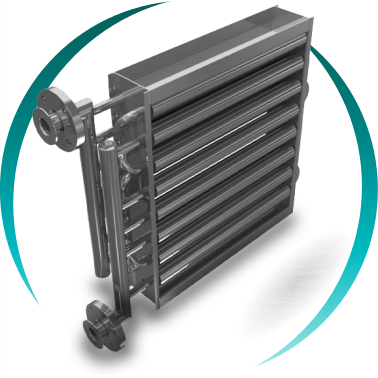
Finned tubes heat exchanger
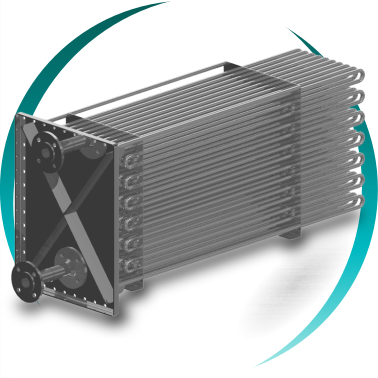
Smooth tubes heat exchanger
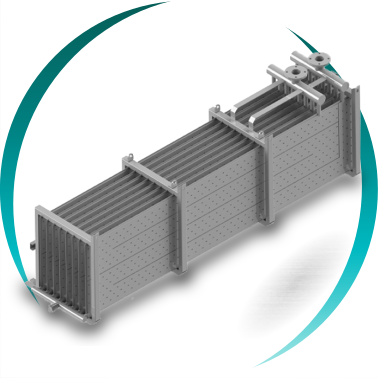
Pillow plate heat exchanger