Heat exchangers for the paper industry
Heat exchangers in the paper industry are thermal engineering systems designed to optimize paper drying, recover energy from combustion gases, and improve process steam efficiency. Proper selection reduces specific energy consumption (kWh/ton), stabilizes the final paper moisture, and lowers the overall operating costs of the plant.
Why is thermal engineering critical in a paper mill?
The drying section usually represents the largest energy consumption in the entire factory, often exceeding 50% of the total thermal consumption.
Main objectives:
- Control the final moisture of the paper.
- Optimize steam consumption.
- Recover waste heat.
- Reduce emissions and improve boiler performance.
- Ensure dimensional stability and surface quality.
In continuous industrial environments, small improvements in heat transfer have a direct impact on annual OPEX.

Thermal architecture of a paper mill
The process includes:
- Pulp preparation (disintegration, refining, cleaning)
- Sheet formation
- Mechanical pressing
- Thermal drying
- Finishing (calendering, coating, winding)
Heat transfer is mainly involved in:
- Cylinder drying section (Yankee or multicylinder)
- Hot air systems
- Steam boilers
- Combustion gas recovery
- Superheated water or thermal oil systems
Classification of heat exchangers in the paper industry
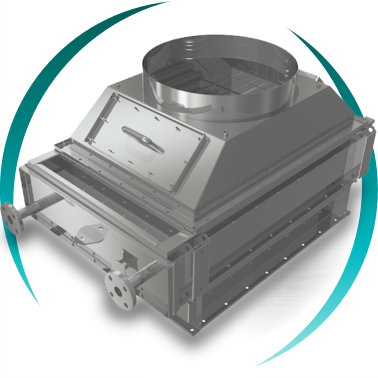
Boiler economizers
Heat recovery units for water, thermal oil, and steam boilers
Main application:
- Recover heat from exhaust gases to preheat feedwater.
Typical ranges:
- Gas temperature: 180–350 °C
- Steam pressures: 6–40 bar
- Fuel consumption reduction: 3–8%
Direct impact on overall boiler efficiency.
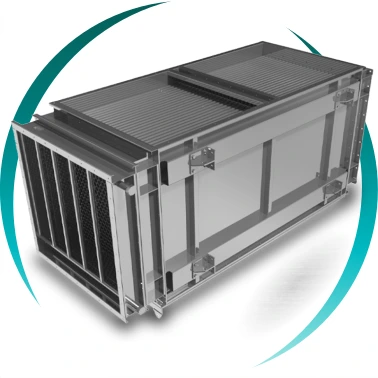
Flue gas heat recovery units
Suitable for high fouling factors, fibers, and cellulose
Application:
- Combustion air preheating
- Recovery for secondary circuits
Designed to operate with:
- Particle-laden gases
- High humidity environments
- Possible corrosive conditions
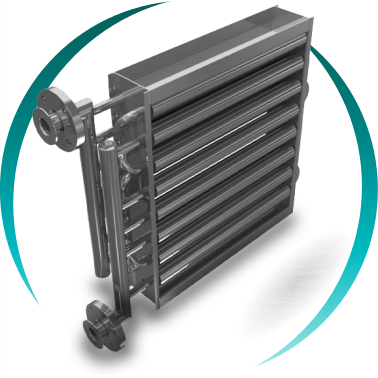
Finned heat exchangers for hot air
Paper drying system
Main application:
- Air drying systems
Technical advantages:
- High specific surface area
- Improved overall heat transfer coefficient
- Possibility of operating with steam or superheated water
Systems for flash steam and condensates
Optimization of flash steam systems, live steam, and condensers
Steam circuit optimization:
- Latent energy recovery
- Loss reduction
- Improved thermal stability
Paper drying engineering
Drying reduces sheet moisture from approximately 60% to final values between 4% and 8%.
Critical variables:
- Cylinder surface temperature
- Steam pressure
- Machine speed
- Air flow
- Thermal gradient
Poorly dimensioned heat transfer can cause:
- Basis weight variations
- Wrinkling
- Dimensional stability problems
- Excess energy consumption
Economic and energy impact
Proper thermal optimization can:
- Reduce specific steam consumption by 5–12%
- Reduce indirect CO₂ emissions
- Stabilize processes in high-speed machines
- Reduce maintenance in combustion systems
In continuous production environments, the return on investment can usually be within ranges below 24 months, depending on the configuration.
Regulatory compliance and industrial environments
Equipment must consider:
- Pressure equipment directive
- Industrial energy efficiency
- Corrosion-resistant materials for gases with sulfur compounds
- Ease of inspection and maintenance
Structural robustness and rigorous thermal calculation are decisive.
Custom solutions specially designed for the paper industry.
We prepare quotations with precision and rigor.
Products subjected to strict quality control.
Fast and on-time response to minimize plant impact.
FAQs
What is the main function of a heat exchanger in a paper mill?
To control paper drying and recover thermal energy to reduce energy consumption.
To transfer heat efficiently between fluids in order to stabilize final moisture, optimize process steam, and recover energy from combustion gases.
Where is the highest energy consumption concentrated?
In the drying section.
The water evaporation process requires high latent energy, making drying the main thermal consumer in the plant.
What impact does heat recovery have?
Direct reduction of fuel consumption and emissions.
Recovering combustion gases using economizers increases overall boiler efficiency and reduces annual energy OPEX.
Value proposition for technical and engineering management
In competitive paper industry environments, the difference is not only producing heat, but managing it with precision.
An optimized thermal architecture allows:
- Better performance per ton produced
- Structural reduction of energy costs
- Greater operational stability
- Adaptation to ESG and decarbonization objectives