
Heat exchangers for the materials process and drying
Industrial processes for transforming materials such as wood, paper, cellulose, cement, lime, glass, textiles, food or minerals require stages of thermal treatment, moisture evaporation, drying and temperature control to guarantee the final product quality, dimensional stability, mechanical strength and durability.
Technical solutions for industrial thermal processes, drying and energy recovery
In these environments, industrial heat exchangers are critical equipment because they allow:
- Transfer thermal energy in a controlled manner
- Dry materials with humidity control
- Recover residual heat from fumes and gases
- Reduce overall plant energy consumption
- Improve sustainability and reduce emissions
- Stabilize continuous production processes
- Protect equipment and materials from thermal shocks
In modern industry, the thermal exchange system is not auxiliary equipment, but a structural part of the production process and the overall energy efficiency of the installation.
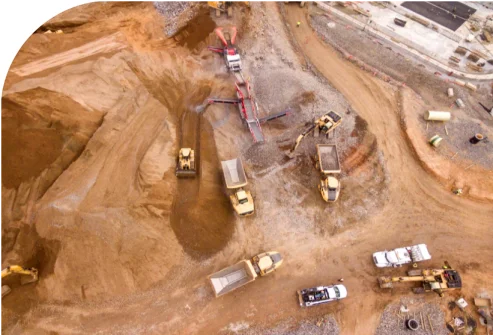
Role of heat exchangers in industrial process and drying
Importance of thermal control in industrial materials
In most industrial materials, humidity and temperature determine:
- Mechanical properties
- Dimensional stability
- Surface quality
- Crack resistance
- Density and porosity
- Subsequent processability
- Product lifetime
For this reason, industrial drying is a critical process in sectors such as:
Sector |
Thermal process |
|---|---|
Wood |
Drying and stabilization |
Paper and cellulose |
Fiber drying |
Food |
Drying of cereals, pasta, meat, fish |
Textile |
Fabric drying |
Leather |
Tanning and drying |
Cement and lime |
Thermal process and dehydration |
Glass |
Melting, controlled cooling |
Mining |
Mineral drying |
Metallurgy |
Heat recovery and thermal treatment |
Plastics |
Cooling and stabilization |
In all these processes, controlled heat transfer determines energy efficiency, product quality and productivity.
Heat recovery and industrial energy efficiency
Recuperators and economizers in processes with fumes and dust
Many industries such as metallurgy, mining, paper, cement or glass generate high-temperature exhaust gases containing dust, particles or vapors. This energy can often be recovered using industrial heat exchangers.
Heat recovery allows:
- Heating combustion air
- Heating drying air
- Producing process hot water
- Preheating industrial fluids
- Reducing fuel consumption
- Reducing CO₂ emissions
- Improving overall plant performance
In many industrial installations, heat recovery can reduce energy consumption between 15% and 35%.
Industrial processes for transforming materials examples
Glass manufacturing process
In glass manufacturing, raw materials (silica, soda ash, lime and additives) are melted in furnaces at temperatures that can reach 1500–1600 °C. During this process, exhaust gases containing a large amount of thermal energy are generated.
Using industrial heat exchangers it is possible to:
- Recover heat from furnace exhaust gases
- Preheat combustion air
- Supply dryers
- Reduce fuel consumption
- Control glass cooling
- Reduce internal stresses and breakage
- Improve final product quality
Thermal control during glass cooling is especially important to avoid thermal shock fractures and internal stresses.
Paper and cellulose industry
In the paper industry, the drying process is one of the stages with the highest energy consumption.
Heat exchangers are involved in:
- Live steam for drying cylinders
- Flash steam recovery
- Condensate recovery
- Drying air heating
- Flue gas heat recovery
- Industrial ventilation systems
Paper drying removes water from plant fibers and determines:
- Paper strength
- Surface roughness
- Dimensional stability
- Printing quality
- Production speed
Good thermal engineering in paper mills can significantly reduce steam consumption.
Wood drying
Wood drying is essential to reduce moisture and prevent:
- Deformations
- Cracks
- Fungi
- Dimensional variations
- Loss of mechanical strength
Drying kilns operate with:
- Hot air recirculation
- Humidity control
- Temperature control
- Airflow uniformity
- Heat recovery
- Energy optimization
Heat exchangers allow heating the air in drying kilns efficiently and in a controlled way.
Types of heat exchangers for material processing and drying

Industrial economizer
Heat recovery from exhaust gases
Economizers are heat exchangers designed to recover heat from combustion gases or exhaust gases from industrial processes.
Typical applications:
- Industrial boilers
- Furnaces
- Turbines
- Industrial dryers
- Combustion air preheating
- Drying air heating
- Process water heating
Main benefits:
- Reduction in fuel consumption
- Improved boiler efficiency
- Emission reduction
- Recovery of residual energy
- Improved overall plant efficiency
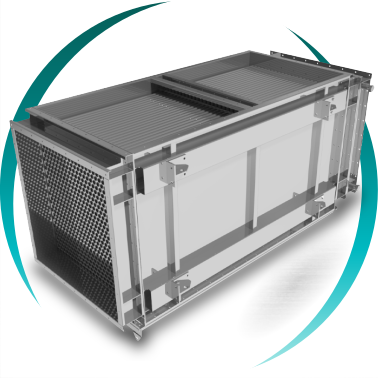
Air-to-air heat exchanger
Heat transfer between air streams without mixing
Cross-flow or counterflow air-to-air heat exchangers transfer energy between two air streams without mixing them.
They are especially suitable for:
- Paper mills
- Foundries
- Cement plants
- Industrial dryers
- Industrial ventilation
- Flue gas heat recovery
- Dusty or dirty environments
Advantages:
- No cross contamination
- High robustness
- Easy maintenance
- Suitable for dirty environments
- Energy recovery in industrial ventilation
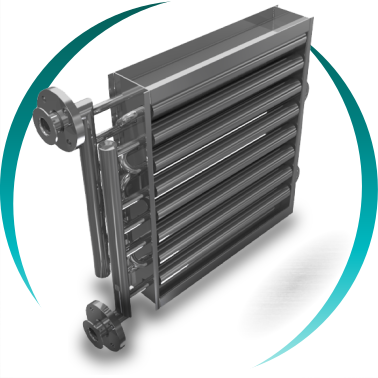
Finned tube heat exchanger
Processes with dirty, dusty or viscous fluids
Smooth tube or finned tube heat exchangers are one of the most robust solutions in industrial environments with fouling risk.
Applications:
- Dusty gases
- Oily gases
- Industrial fumes
- Liquids with sediments
- Viscous fluids
- Industrial tanks
- Process cooling
- Fluid heating
- Heat recovery
Main advantages:
- High mechanical resistance
- Easy cleaning
- Long service life
- Adaptable to existing equipment
- Custom design
- Operation in aggressive environments
Thermal engineering and custom industrial design
Technical architecture of an industrial heat exchange system
The correct design of a heat exchanger for industrial processes and drying requires:
- Thermal load calculation
- Fluid flow rates
- Inlet and outlet temperatures
- Allowable pressure drops
- Fluid type (air, steam, thermal oil, water, gases)
- Fouling level
- Construction materials
- Working pressures
- Corrosion
- Maintenance
- Integration with the production process
- Heat recovery
- Energy optimization
- Industrial standards
- Technical documentation
Poor heat exchanger selection can cause:
- Energy losses
- Fouling problems
- Production shutdowns
- Energy cost overruns
- Poor final product quality
- Maintenance problems
- Reduced equipment lifetime
Economic and operational benefits of heat exchangers in drying processes
The correct implementation of heat exchangers in industrial processes allows:
- Reduction in energy consumption
- Recovery of residual heat
- Reduction in operating costs (OPEX)
- Improved process efficiency
- Increased productivity
- Thermal process stability
- Emission reduction
- Improved sustainability
- Reduced maintenance
- Extended plant lifetime
- Improved energy KPIs
- Fast return on investment (ROI) in heat recovery projects
Custom industrial technical solutions for process and drying
Industrial heat exchange solutions are developed for:
- Industrial drying
- Heat recovery
- Thermal processes
- Process cooling
- Fluid heating
- Combustion air
- Drying air
- Steam and condensates
- Industrial gases
- Thermal fluids
- Thermal oil
- Integration with furnaces and boilers
- Integration with industrial dryers
- Integration with industrial ventilation
- Integration with cogeneration
- Integration with plant energy systems
With thermal, mechanical and process design fully customized for each industrial installation.

Technical solutions specifically designed for each industrial process.

Reliable planning and delivery times to minimize impact on production.

Equipment subject to quality control, thermal calculation and technical documentation.

Complete service including manufacturing, logistics and delivery to plant.
FAQs
What is a heat exchanger for industrial drying?
It is equipment that transfers thermal energy between fluids to heat air or process fluids used in drying industrial materials.
It allows temperature control, reduces material moisture, recovers residual heat and improves the energy efficiency of the industrial process.
Why is heat recovery important in industrial processes?
Because it allows the reuse of energy from exhaust gases or hot process fluids.
Heat recovery reduces energy consumption, emissions, operating costs and improves overall industrial plant performance.
Which sectors use heat exchangers for material drying?
Mainly wood, paper, food, textile, leather, cement, lime, glass, mining, metallurgy and plastics.
In all these sectors, drying and thermal control are critical processes to ensure product quality and production efficiency.
Which type of heat exchanger is best for dusty or dirty environments?
Usually smooth tube or finned tube heat exchangers and industrial air-to-air heat exchangers.
These units are designed to work with dusty gases, dirty fluids or fouling conditions and allow easier maintenance and longer service life.
What energy savings can heat recovery provide?
It depends on the process and the selected heat exchange technology.
Industrial heat recovery can reduce energy consumption between 15% and 35% in many installations with high-temperature exhaust gases.
Technical conclusion
Heat exchangers used in material processing and industrial drying are strategic equipment for energy efficiency, product quality and industrial sustainability.
Proper thermal engineering allows:
- Optimizing drying processes
- Recovering residual energy
- Reducing energy costs
- Improving product quality
- Reducing emissions
- Increasing productivity
- Improving plant reliability
- Extending equipment lifetime
- Improving industrial competitiveness
In modern industry, the heat exchange system is part of the plant’s energy and production strategy, and its design must be part of process engineering from the initial project phase.