
Heat exchangers for the energy industry
A heat exchanger for the energy industry is equipment designed to transfer thermal energy between fluids, gases, or vapors in power generation plants and energy production systems, with the objective of maximizing thermodynamic efficiency, reducing emissions, ensuring operational safety, and optimizing energy recovery.
It typically operates with:
Saturated or superheated steam
Combustion gases
Combustion air
Thermal oil
Superheated water
Process fluids in closed cycles
In this sector, thermal transfer is not only about efficiency: it is about plant availability, grid stability, and energy sustainability.

High-performance thermal solutions for power plants, cogeneration, and renewable energy
The energy industry integrates diverse technologies:
Conventional thermal power plants
Gas-steam combined cycles
Cogeneration and trigeneration
Nuclear energy
Biomass and energy recovery from waste
Solar thermal energy
Oil and gas
Combustion engines and turbines
All share a common denominator: the need to manage high thermal flows with maximum reliability and performance.
The energy industry: context and thermodynamic demands
Energy generation involves processes with:
Temperatures above 900–950 °C in certain applications
High steam pressures
Gases containing particles and contaminants
Continuous 24/7 operating cycles
Strict safety and availability requirements
Heat exchangers are critical in:
Steam condensation in turbines
Steam superheating
Combustion air preheating
Waste heat recovery (HRSG)
Cooling of engines and auxiliary systems
Safety systems in nuclear power plants
Energy integration of industrial processes
Poor thermal management can cause:
Cycle efficiency losses
Increased fuel consumption
Higher emissions
Critical overheating
Unplanned shutdowns
Key applications in the energy sector
Exhaust gas heat recovery
Higher efficiency and lower fuel consumption and CO₂ emissions
Gas turbine exhaust gases
Boiler flue gases
Diesel cogeneration engines
Steam systems for turbines
Optimization of the Rankine cycle and improved energy efficiency
Superheaters
Reheaters
Condensers
Feedwater heat exchangers
Critical cooling and safety
Excellence in mechanical design and traceability
Cooling of auxiliary engines
Redundant systems in nuclear power plants
Thermal control in distributed generation systems
Energy integration in renewable systems
Optimization of renewable energy systems
Heat exchangers for biomass plants
Recovery systems in gasification processes
Concentrated solar thermal systems
Hybrid systems with thermal energy storage
Types of heat exchangers for the energy industry
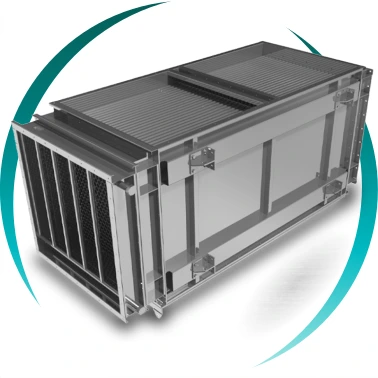
Gas heat recovery unit
Cross-flow or counter-flow configuration
Heat transfer between combustion gases and air
Design that facilitates cleaning and maintenance
Resistance to fouling and corrosion
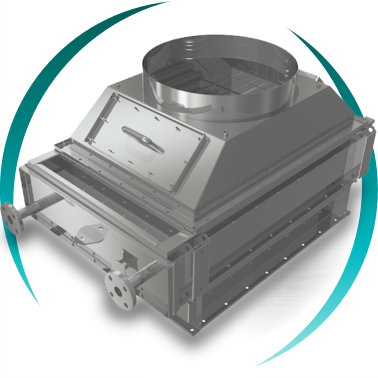
Industrial boiler economizer
Recovers energy from extraction gases
Preheats feedwater
Improves the overall efficiency of the boiler
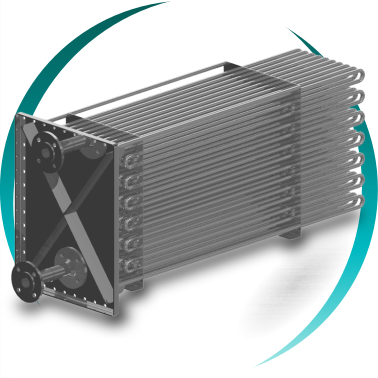
Channel-immersed heat exchangers
High resistance to sediment buildup
Process liquid cooling
Structural robustness and safety
Engineering and structural reliability
In energy environments, the design requires:
Advanced thermodynamic calculation
Mechanical analysis according to pressure and temperature
Thermal expansion studies
Vibration verification
Seismic analysis for critical installations
It may include:
Material certificates
Welder qualification
Welding procedure qualification (WPS/PQR)
Quality and traceability documentation
Non-destructive testing
These elements reinforce technical authority and regulatory compliance.
Strategic benefits for energy operators
Increased overall system efficiency
Emission reduction
Greater plant availability
Recovery of residual energy
Optimization of operating costs
Environmental and regulatory compliance

Tailor-made solutions specifically designed for the energy sector.

We prepare quotations with precision and technical rigor.

Products subject to strict quality control.

Agile, on-time responses to minimize production impact.
FAQs
What is a heat exchanger in the energy sector?
It is equipment that transfers heat between fluids or gases to improve the efficiency of energy generation and recover residual energy.
In power plants, heat exchangers optimize the thermodynamic cycle through condensation, superheating, heat recovery, and thermal control of auxiliary systems, reducing fuel consumption and emissions.
Why is heat recovery crucial in cogeneration?
Because it allows the energy from exhaust gases to be utilized and increases the overall efficiency of the system.
In cogeneration systems, heat recovery can raise total efficiency above 80%, transforming residual energy into useful steam or process heat.
What temperatures can these systems withstand?
In specific applications, up to 950 °C.
It depends on the design and materials, but in high-demand projects very high temperatures can be achieved while maintaining mechanical integrity and stable thermal performance.
How is safety ensured in critical power plants?
Through structural design, certification, and full traceability.
This includes mechanical calculations, seismic analysis, welding qualification, non-destructive testing, and complete technical documentation in accordance with applicable regulations.
Heat exchangers for the energy industry
Solutions designed for:
Thermal power plants
Combined cycle plants
Nuclear energy
Cogeneration and trigeneration
Biomass and renewable energy
Oil and gas
High-performance thermal engineering for highly demanding energy systems.
Efficient heat management is at the core of any competitive, sustainable, and safe energy system.